
Families face higher electricity costs as data centre debate grows
DROGHEDA households are facing electricity price increases with a government minister warning that the hikes could be up to nine percent. Energy Minister Darragh O’Brien stated that electricity suppliers could raise by between four and nine percent in the summer months, with the potential of adding as much as €150 to the average annual household bill.
But the good news is that the proposed new data centre on the site of the old Premier Periclase factory won’t have to worry about such matters as ordinary households and small businesses are subsidising the electricity of these monster power guzzlers.
There’s a petition doing the rounds urging the public to block the development claiming it will have serious consequences for the town, especially the River Boyne, and will provide only a handful of jobs.
An Taisce, the country’s national trust, describe the project as “reckless and irresponsible” and point to the vast energy consumption of data centers, as well as potential carbon emissions and the impact it could have on local water supplies.

In hot weather, data centres can use up to five million litres of water a day to cool it’s IT equipment with the heated water then pumped back into rivers which could have an effect on marine life.
People Before Profit’s representative for Louth and East Meath, James Renaghan, is also against the project, and while I seldom agree with his party he has a point when he claims that another data centre for Drogheda, we already have two, is the last thing this city needs.
As it stands, electricity prices in Ireland are among the highest in Europe, around 60% above the EU average, with the Government warning there are more on the way.
While the Government has refused to give households another round of energy credits to help with rising bills, the data centres have no such worries.
It has now been revealed that Irish households are paying almost twice as much for their electricity as data centres.
Figures from Eurostat, the EU’s official statistics body, show that data centres also have much lower network charges imposed on them than those for householders.
On the other hand, there are never-ending subsidies for the data centres, which are now using well over one-fifth of all the electricity generated in the State with some consuming more power than large towns.
By the end of the decade, it is estimated that data centres will consume almost one third of the country’s electricity supply putting massive strain on an already-overloaded national grid.
To add insult to injury, to help pay for the grid’s upgrade to meet the needs of these power-hungry data centres the cost is being added as a levy to domestic bills.
It seems incredible that Irish families and small businesses are subsisting data centres owned by billionaire Amazon boss Jeff Bezos and tech giants such as Apple, Google and Microsoft when it should be the other way round.
Why not a levy on the country’s 90 or so data centres which are generating billions of euros for their owners to help pay for energy credits for households?
Because this is Ireland, and the ordinary people pay for everything.
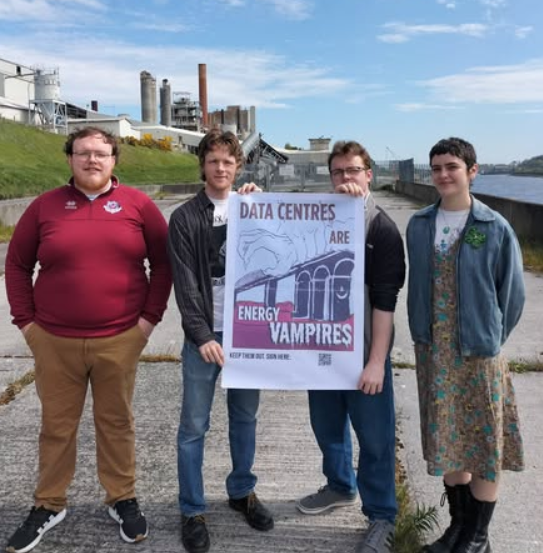
An Taisce and local People Before Profit representative so now want the proposed data centre to go ahead.
Slane bypass cleared to go ahead after court decision
THE people of Slane and district will be celebrating after a judicial review into the long-awaited bypass was dismissed by the High Court during the week.
The case had been taken by former attorney general John Rogers, who owns land in the area, but the court’s decision means that work can now begin.
An Comisiún Pleanála granted planning permission last summer but Mr Rogers applied for a legal review of that decision.
The project will see the construction of a 3.5 kilometre road around Slane village, including a dual carriageway, as well as a 258 mitre bridge over the River Boyne.
While the bypass will be welcomed, it’s unfortunate that at least 23 people had to die before permission was granted to build it.
Lottery row as bookmakers offer better value for punters
THE National Lottery has some cheek calling for the Government to ban the practice of betting on its games in bookie shops and betting apps.
The Lotto operator claims that around €289 million in potential lottery sales has been diverted to bookmakers because of lottery betting. There’s still many hundreds of millions generated for good causes and more again for the French owners.
The fact is that if a player manages to correctly pick two or three numbers playing Lotto, they will be lucky to get a tenner, while they would receive two or three hundred euros if they had picked them in a bookies.
Also, the prices of Lotto tickets are far too dear, especially the Saturday and Wednesday draw while punters can bet as little as they like in the bookies.