

Ireland is supposed to be booming but I can’t remember a time where there was so much public angst, anger and frustration. What is all the more puzzling is that we are supposedly one of the wealthiest countries in the world but there is no appreciable feelgood factor that would normally accompany financial good times.
Another interesting aspect of the predicament that this country finds itself is that internationally Ireland is being held up as an exemplar of what can be achieved by a small state in the course of a century.
Sure enough the weather doesn’t help but there’s a lot of misery around and a growing sense of hopelessness that things are not getting better.
A walk around Drogheda city centre with its closed shops and derelict buildings only adds to the despondency while the traffic congested roads adds to the frustration. It’s all a far cry from Drogheda was a bustling borough full of life with a vibrant town centre with busy shops, pubs and restaurants.
Now it’s like a ghost town on evenings during the week and while there are initiatives to promote local nightlife all I can say is they’ve their work cut out. And it ain’t just a local thing, a recent Red C poll found that Ireland ranks among the world’s most stressed nations. The survey revealed that we are a nation under extreme pressure with 93% of people saying they’ve experienced stress, while just six per cent claimed they never have.
Younger adults feel the strain most, with stress seemingly a part of many Irish adults’ everyday life.
Despite full employment the survey found that almost every Irish adult felt a negative mental state in the past month with feelings of worry and loneliness high. What is even more concerning is that mental health worries extend to the next generation with many parents worried about their children’s wellbeing and openness to talk.

This is hardly surprising when so many young people feel they are part of a forgotten generation who fear they will never build an independent life of their own. The mental health of (especially) young people is not helped by being constantly informed that they are somehow privileged when they have less long-term prospects than their parents and grandparents.
Just before Christmas the Department of Justice awarded €100,000 to a school initiative that teaches pupils about the concept of “white privilege”. Apparently this is to promote the idea that all white people have inherent advantages in life purely by virtue of being white. This is supposed to promote cohesion but there’s every chance it will have the opposite effect and cause anger.
Just try telling that to a couple or individual trying to buy a property in a housing market that only cares about the colour of their money and not the tone of their skin. To someone who came from a family that had to call on the Society of St Vincent de Paul for food and to the hundreds of thousands of families who do so today I believe this privilege nonsense amounts to a gross insult.
Real privilege comes from wealth and unfortunately despite the booming economy, rampant inflation and soaring house prices means many people today can’t afford even the things in life that previous generations took for granted.
A Wet January and a Town That’s Seen It All Before
So much for having a dry January, the month gone by has been one of the wettest on record with enough rain to drive you to drink if you happened to be trying to stay off it. I happened to get caught in a flood at Queensborough on the way back from Baltray during the week but after trying to pass through it made a tactical retreat and probably saved the life of my old Mondeo.
While the alarmists will be claiming this is due to climate change the Boyne has been flooding low lying areas of Drogheda for centuries. My father used to recall he and other workers coming from the Cement factory on the Boyne road had to rescue women from Ushers Mill after they were trapped in the factory by rising water. That was in the early 1950s and there’s been a lot of water under the bridge since then.
When the Night Didn’t End at Closing Time
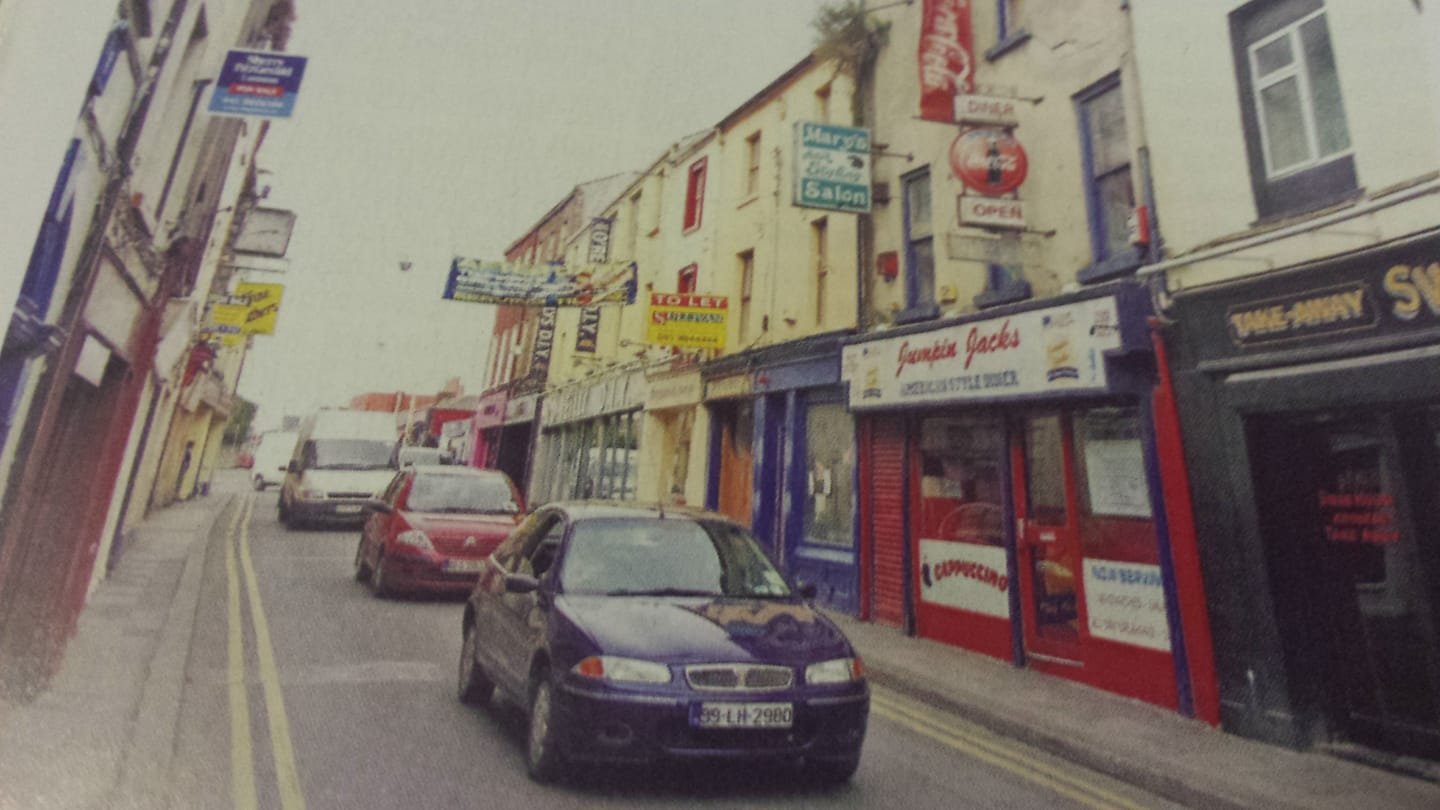
Photo credit Noel Bailey and Drogheda Down Memory Lane
Last week I wrote about Pete’s late night takeaway in James’s Street which was a favourite with punters coming from the pubs and clubs back in the 1970s. Another haunt of hungry night owls in the 1990s was Jumpin Jacks in Narrow West Street which is now sadly no more although it was still in business up until around seven or eight years ago.
It was renowned for its great burgers and chilli fries and served as a late night meeting place when the pubs closed and many a happy night I spent there. Unfortunately Jumpin Jacks is gone and the entire street is in danger of going that way as well.
Driving Without Insurance and Getting Away With It
Driving without insurance is supposedly a serious criminal offence in this country but you wouldn’t think so judging by the way the courts treat it. Those convicted of the offence can face six months in jail, a fine of up to €5,000 and as many as five penalty points.
It also carries a mandatory driving disqualification for at least two years for a first offence yet there are regular media reports of those convicted of having no insurance being fined a few hundred euro and no driving bans imposed. This is totally unfair on those who pay dearly for insurance cover and when there’s little or no deterrent the situation can only get worse.
The Border Bargain That Isn’t One Anymore
There was a time when it was worthwhile to do your shopping on the other side of the border but those days are gone as grocery prices in the North are even worse than down here. In an Asda supermarket last week I couldn’t believe just how much prices have risen in the past year or so making it uneconomical to shop up North when the Sterling difference and cost of fuel for the trip are taken into account.
While beer, wine and spirits are still cheaper across the border, it’s now cheaper to do your shopping in the likes of Tesco, Dunnes or Aldi.