
Fianna Fáil TD for Louth Erin McGreehan has welcomed confirmation from the Minister for Health that screening for Spinal Muscular Atrophy (SMA) and Severe Combined Immunodeficiency (SCID) is expected to commence later this year.
Deputy McGreehan raised the matter through a Parliamentary Question seeking an update on the implementation of SMA screening within the national newborn bloodspot screening programme and asked whether a target date could be confirmed for its rollout to all newborns. She also asked the Minister to outline the Government’s commitment to expanding the newborn screening programme to include additional rare diseases.
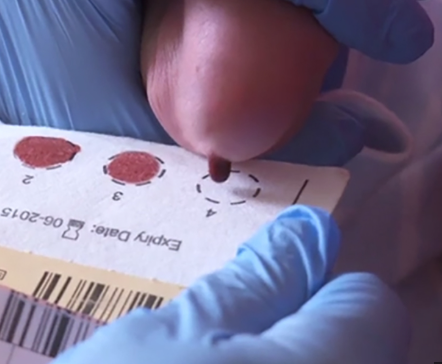
In her response, the Minister said the heel prick test currently screens newborns for nine rare and serious diseases. The Programme for Government also commits to continually reviewing the number of conditions that babies can be screened for.
She added that in 2023 the National Screening Advisory Committee recommended the addition of Severe Combined Immunodeficiency (SCID) and Spinal Muscular Atrophy (SMA) to the National Newborn Bloodspot Screening Programme and both recommendations were approved.
As part of Budget 2024, €1.4 million in development funding was allocated to support the introduction of screening for both SCID and SMA. Once implemented, the number of rare diseases and conditions screened for in Ireland will increase to 11. Screening is expected to commence later this year.
Welcoming the confirmation, Deputy McGreehan said:
I am pleased to get confirmation from the Minister that screening for SMA is to commence later this year. I raised concerns with the Minister in relation to its current implementation status, and she has informed me the HSE has advised that the equipment needed to enable the roll-out testing for SMA and SCID has been purchased, delivered, and successfully installed at the newborn screening laboratory, and significant progress continues with regards to the laboratory verification process.
The expansion of the NNBSP is critical for parents and children who may have children with SMA or other forms of rare diseases. The heal prick is essential for this, and I am pleased that the recruitment process to hire the additional staff required to support the expansion of it has been completed, and work on developing screening and treatment pathways for both conditions is in its final stages.
Concluding, Deputy McGreehan said she will continue to work on the issue until the screening programme is fully implemented.
I have worked with constituents and SMA Ireland in relation to this issue. I will continue to represent them until we see a full implementation of screening later this year, and I look forward to seeing that roll out.
In the meantime, I will continue to engage with the Minister for Health to ensure this is delivered as soon as possible.