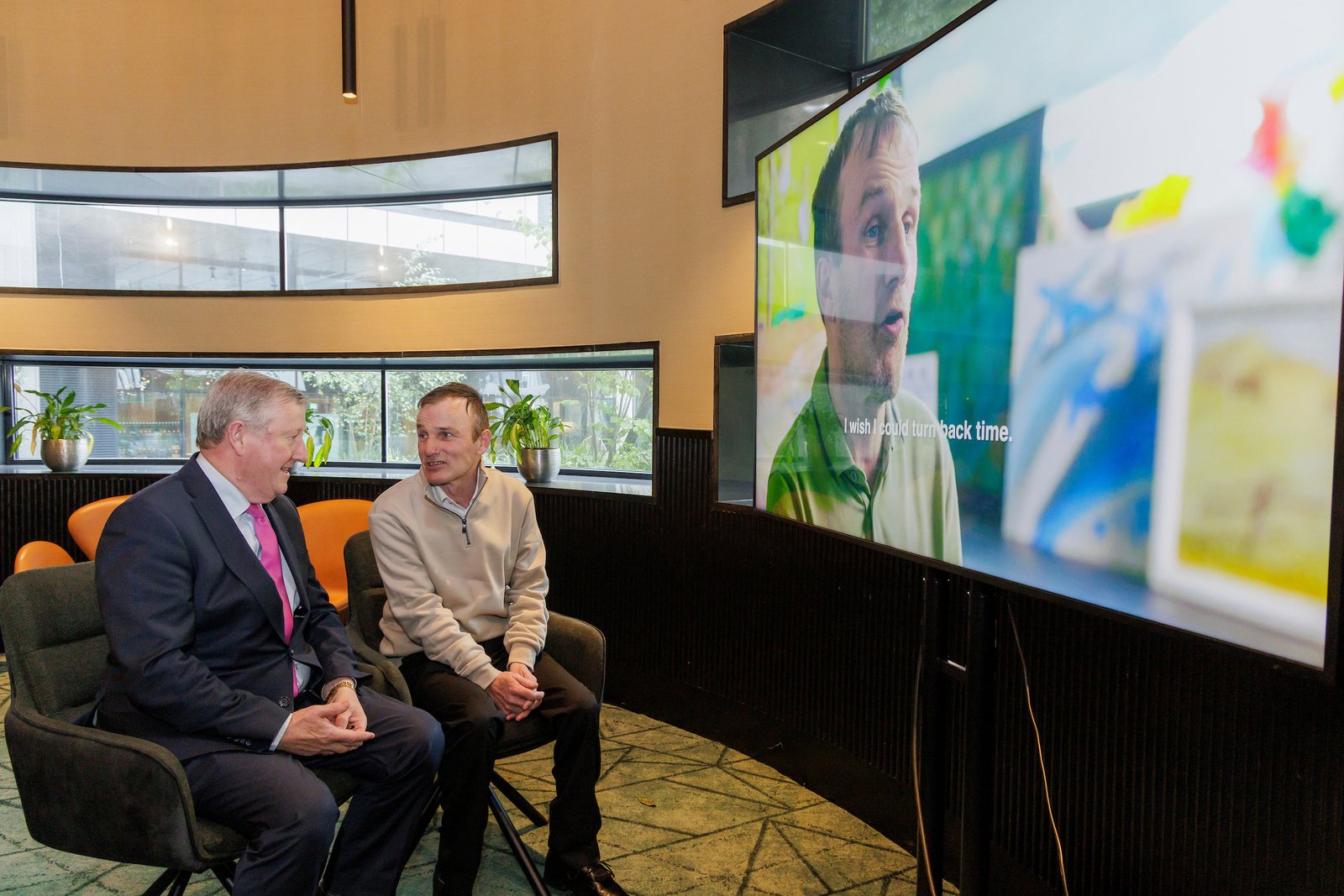
Minister of State for Road Safety Seán Canney with Niall Connor at the launch of RSA video
Niall Connor cycling safety campaigning is reaching a national audience as the Dundalk man shares his life-changing experience in a new Road Safety Authority video.
Niall has lived with a brain injury for 30 years after falling from a bicycle while not wearing a helmet.
Now supported by RehabCare in Dundalk, he is using his experience to warn young cyclists about how quickly one accident can have lifelong consequences.
“One fall from a bike without a helmet changed my life forever,” Niall said.

“I have lived with a brain injury now for 30 years. If I could turn back time, I’d wear a helmet. We can’t stop kids being fearless, but we can protect them. We only get one life, protect it.”
Niall has become a campaigner for safer cycling and has previously brought his message to Leinster House, where he met Minister of State for Road Safety Seán Canney.
New report on accessible transport
Niall’s story also features in a new Rehab Group report examining the transport and road safety experiences of more than 600 people with disabilities across Ireland.
The report, Barriers to Accessible and Inclusive Transport, is based on 90 focus groups involving people supported by Rehab services.
It highlights a range of difficulties faced by people with disabilities when using transport and moving through public spaces.
Participants included wheelchair users who reported being forced into traffic and visually impaired pedestrians who said they could not always rely on pedestrian crossing signals.
Others described buses failing to arrive, having to plan journeys at least 24 hours in advance and being unable to use their Free Travel Pass for some journeys.
Some participants reported paying as much as €80 a month to travel to their day service because their Free Travel Pass was not accepted.
The report argues that problems with accessibility can prevent people from working, attending medical appointments, accessing education and taking part in community life.
It calls on Government, the National Transport Authority, transport operators and local authorities to work directly with people with disabilities when designing and improving transport services.
‘Decisions can have lifelong consequences’
Minister of State for Road Safety Seán Canney thanked Niall for speaking publicly about his experience.
“I want to thank Niall for sharing his story and using his own experience to encourage young people to think about their safety when cycling,” he said.
“His message is a powerful reminder that the decisions we make on the road can have lifelong consequences.”
He said the Rehab Group report also gave a voice to more than 600 people with disabilities and the barriers they face when making everyday journeys.
Nuala Carey, Interim Director Partnerships & External Affairs at the RSA, said personal stories could communicate the consequences of road collisions in a way statistics could not.
“Stories like Niall’s can reach people in a way statistics never will,” she said.
“His experience is a powerful reminder that a split-second moment can change a life forever, even when the moment that causes it lasts only seconds.”
She said the RSA had worked with Rehab Group to develop the video and bring Niall’s message to a wider audience.
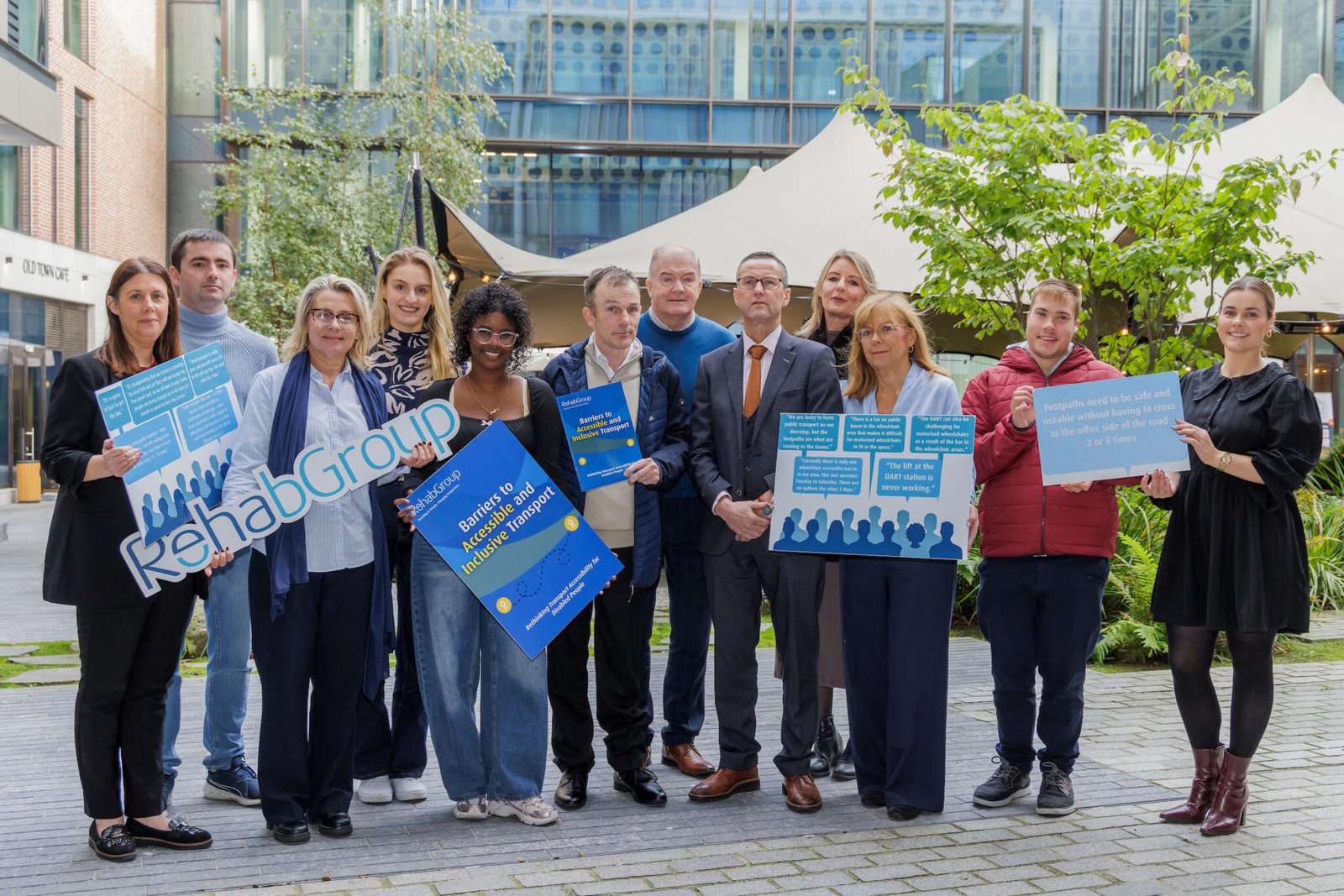
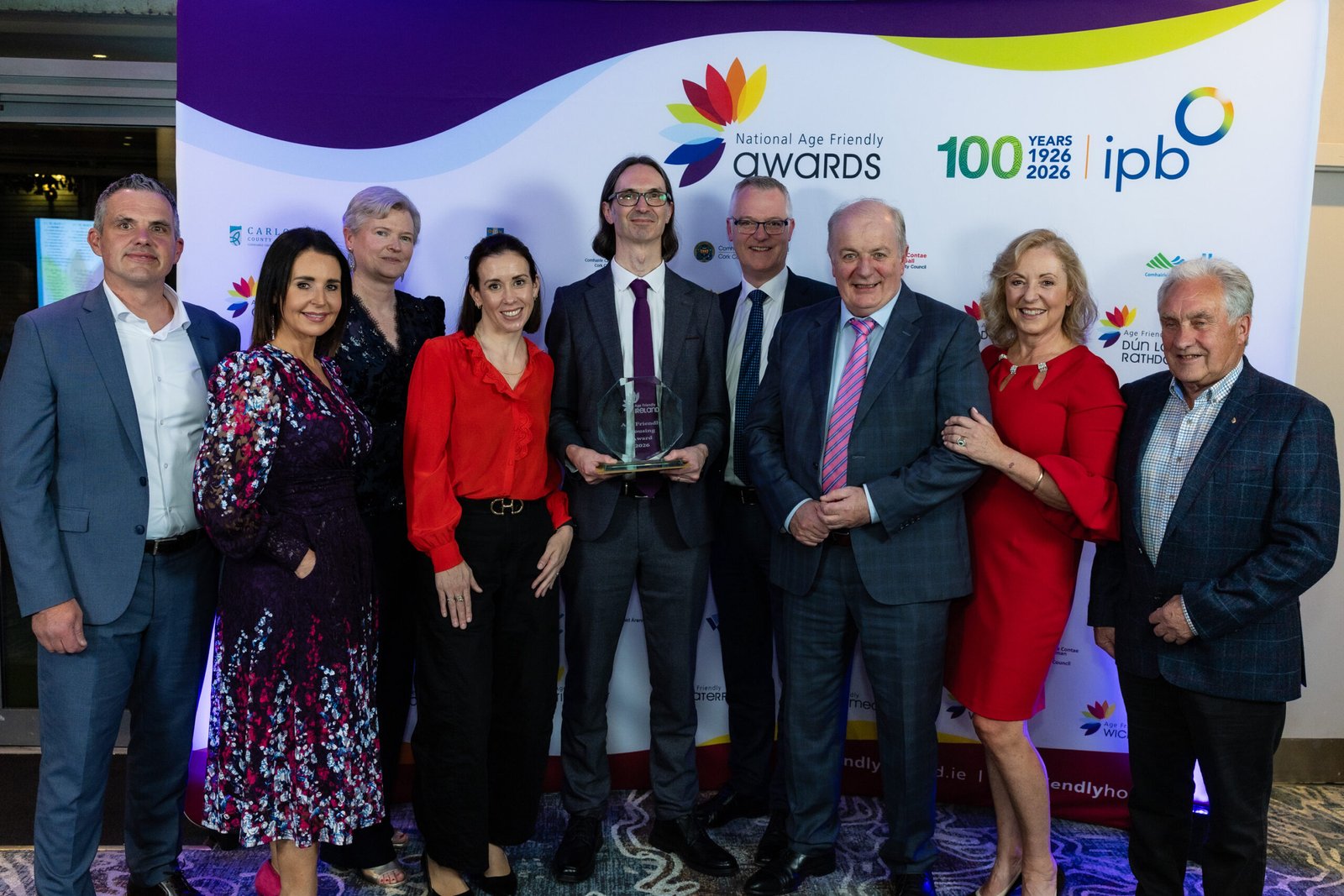
Niall pictured (centre) with representatives from Road Safety Authority and Rehab Groups at the launch of the RSA Rehab Group Video and Transport Report.
Calls for accessible journeys from start to finish
Rehab CEO Laura Keane said accessibility needed to cover every part of a journey, rather than only the bus or train itself.
“Accessibility cannot end at the door of a bus or train. The entire journey from leaving home and reaching the stop to boarding, travelling and arriving safely must be accessible and safe,” she said.
“Ireland has made clear commitments to the rights and independence of people with disabilities. What is needed now is implementation: dependable services, safe infrastructure, meaningful consultation and clear accountability.”
The report is being formally presented to Minister Canney as Rehab Group calls for further action to remove barriers to transport for people with disabilities.