
Photos: Julianstown Traffic Relief Scheme
Residents, road users and public representatives have called for a wider assessment of options for the Julianstown Traffic Relief Scheme before Meath County Council selects a preferred route.

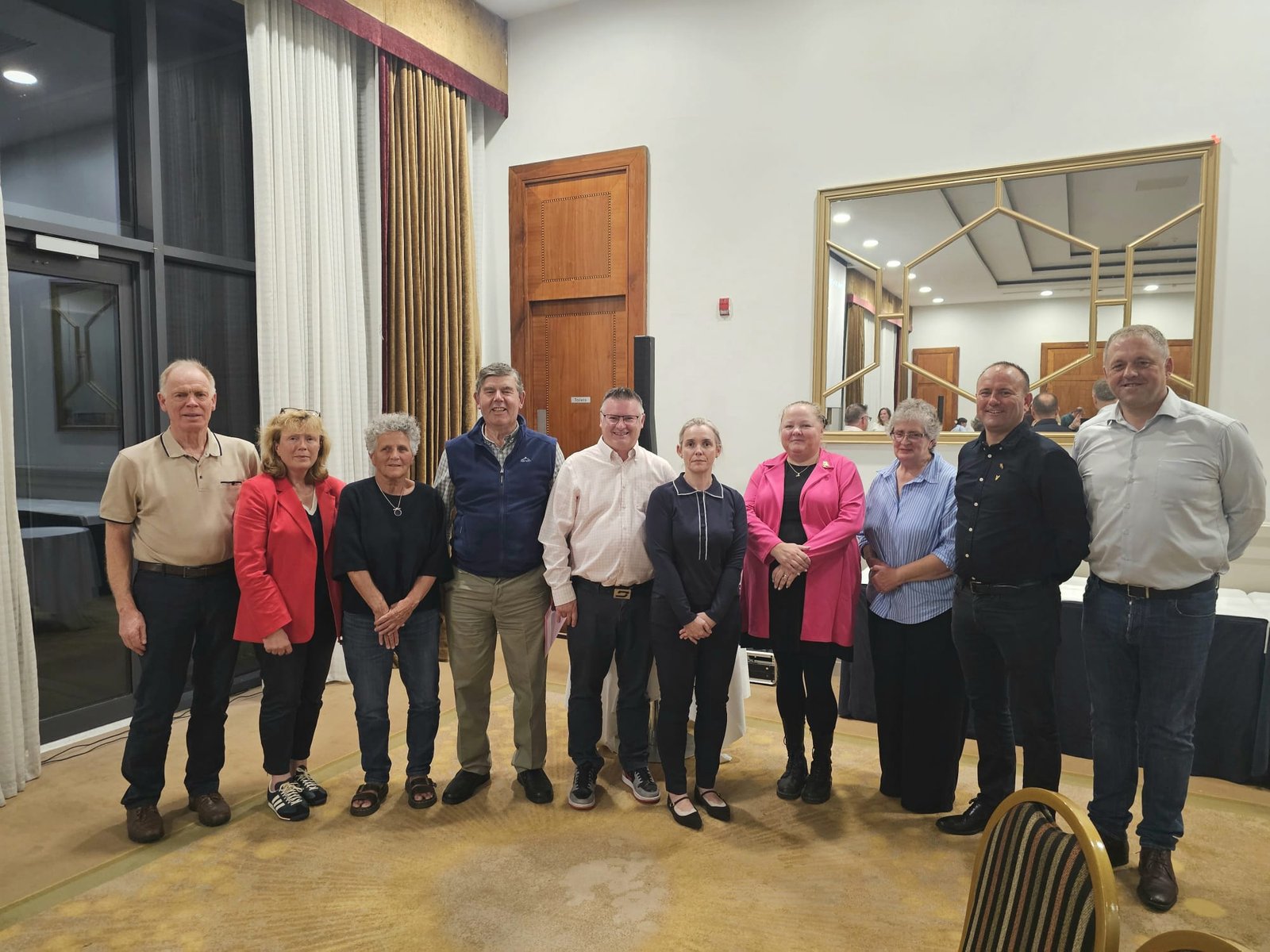
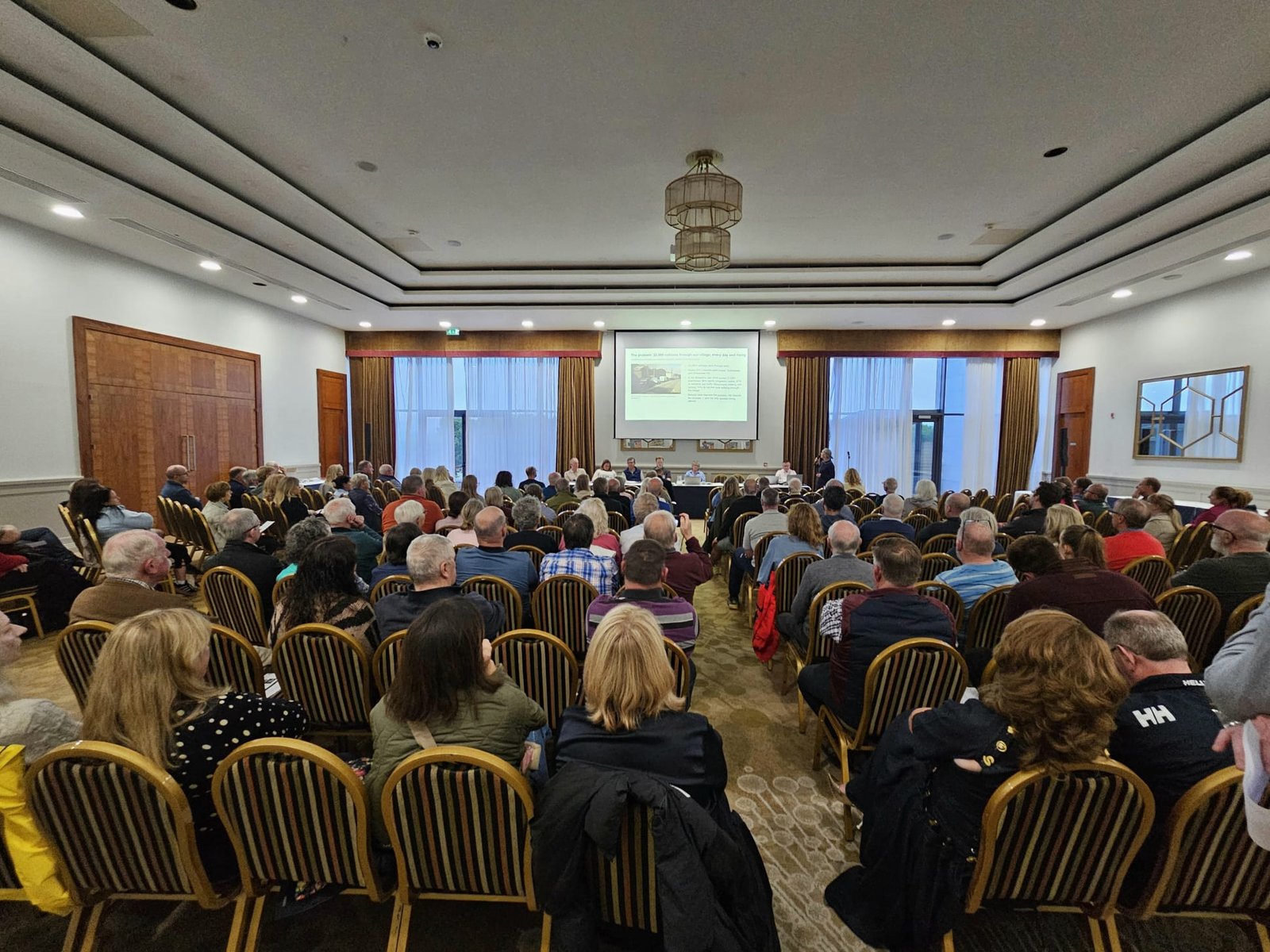
A public information meeting at the CityNorth Hotel on Thursday, 27th August examined the four western bypass corridors currently under consideration.
Among those attending were TDs Thomas Byrne, Gillian Toole and Darren O’Rourke, Senator Alison Comyn, and councillors Stephen McKee, Carol Lennon and Amanda Smith.
The meeting heard broad support for meaningful traffic relief in Julianstown, but also calls for the Council not to narrow the scheme further until outstanding questions and alternative options have been fully examined.
More than 22,000 vehicles a day have been cited in recent public discussion around traffic through the village.
Questions over the four proposed routes
Meath County Council confirmed earlier this year that four route options remain under consideration as part of Phase 2 of the scheme.
Those at the meeting discussed the possible impact of the shortlisted corridors on homes, family businesses, farms and established communities, as well as what happens to traffic once vehicles leave any future bypass.
A key issue raised was that none of the current corridors provides direct access to the M1.
The meeting heard that traffic would instead return to the existing road network towards Junction 7.
Those present also referred to scheme information indicating that a significant proportion of southbound morning traffic through Julianstown continues towards the M1 at Junction 7.
On that basis, speakers called for the potential role of motorway access in any wider traffic relief solution to be examined more closely.
They also called for junction-capacity modelling to be published, including how each option is expected to perform at tie-ins, roundabouts and on approaches to the motorway.
Calls to look beyond a western bypass
The meeting discussed a number of other measures which campaigners believe should be considered as part of a broader solution.
These included:
- direct M1 access north of Julianstown
- a southern M1 to R132 distributor connection
- possible toll reform
- measures relating to HGV traffic
- implementation of the approved village traffic-calming scheme
- DART+ improvements
- improved pedestrian infrastructure
Earlier council reporting confirms that a long list of measures had previously been considered, including public transport improvements, new link roads, a possible M1 junction and toll-related options, before the current four western corridors were shortlisted.
The meeting also referred to a 2025 Feasibility Report which, according to those speaking, examined a revised direct M1 and R132 connection north of the toll plaza.
Campaign representatives said the report indicated that this option could perform well, subject to further modelling, and had recommended that a number of options progress to the next phase.
They are now seeking clarification on what happened between that stage and the current consultation, whether the recommended modelling was subsequently carried out and whether the relevant assessments will be published.
Immediate safety measures
Those attending also separated Julianstown’s immediate road-safety needs from the longer-term traffic relief project.
Meath County Council has had a traffic-calming scheme for the village in development for several years, including pedestrian and cycling improvements, raised crossings, junction treatments and upgraded footpaths.
The meeting heard calls for those measures to proceed without waiting for the wider traffic relief scheme to be finalised.
That position reflects concern locally that road safety and pedestrian conditions in the village need attention regardless of which long-term route is eventually chosen.
Public representatives asked to scrutinise process
Those attending said they were not asking elected representatives to endorse one specific road alignment.
Instead, they want the final decision to be based on what they describe as a fair, transparent and evidence-led assessment of all reasonable options.
Councillors were also told about a motion proposed by Cllr Stephen McKee for the September meeting of Meath County Council.
According to information supplied at the meeting, the motion seeks to revisit and widen the option-selection process before a preferred route is chosen, reassess broader alternatives, publish the evidence used to progress or eliminate options, and move ahead with the approved traffic-calming scheme in the meantime.
A spokesperson for the community campaign said:
“Thursday night’s meeting showed that people want meaningful traffic relief for Julianstown, but also confidence that the best solution has been identified.
“The question is not simply which bypass route people prefer, but whether reasonable alternatives have been fully and fairly assessed before the scheme is narrowed further.
“If direct M1 access was recommended to progress subject to further modelling, people reasonably want to know what happened next. If a combination of measures could deliver meaningful relief while potentially avoiding some bypass impacts, it deserves to be properly tested.
“Julianstown has waited too long for traffic relief to get this decision wrong. We want a safer village, less through traffic and a solution that works for the wider area.”
The latest public consultation on the scheme closed on 31st August after being extended due to strong public interest.
Meath County Council is expected to assess submissions before progressing towards an emerging preferred route.
McKee tables motion of no confidence in current options
Local South Drogheda and East Meath Fianna Fáil councillor Stephen McKee has now tabled a motion of no confidence in the Traffic Relief Scheme options presented by Meath County Council.
McKee said he believes the level of concern among residents shows there is not enough confidence in the current shortlist of four routes.
“It is clear that a significant number of residents of Julianstown and surrounding areas have no confidence in the current process and are not convinced on any of the 4 Options that have been presented as possible solutions to the current traffic problems through the village,” he said.
“I have attended local Public Meetings in the City North Hotel in recent weeks and have heard first-hand the concerns of residents and I have communicated those concerns to Meath County Council.”
McKee said the issue should be looked at in the context of traffic coming from South Drogheda and East Meath more broadly.
“While we absolutely need to address traffic congestion and improve road safety through Julianstown, particularly for school children attending Whitecross NS, we need to look at the wider problem of heavy traffic coming from the South Drogheda and East Meath area and how best to get that traffic onto the M1 Motorway,” he said.
“I have asked Meath County Council to look again at the Bryanstown Link-Road which is in the County Development Plan for the Area and also at the possibility of a link road onto the M1 close to Kilsharvan.”
McKee also pointed again to the scale of traffic through Julianstown.
“There are more than 22,000 vehicles per day travelling through Julianstown and there is significant traffic congestion through the village at peak commuter times as local residents know only too well,” he said.
“We need to fully understand why this is the case; how much of an issue Toll avoidance is and whether improving public transport infrastructure in East Meath such as a new Train Station at Bettystown and a focus on the creation of more local employment can form part of an overall suite of measures to reduce heavy traffic in the area.”
He also renewed his call for the already-approved traffic calming scheme to proceed while a longer-term solution is considered.
“While we wait for a long-term solution, I am demanding that the already-approved Traffic-Calming Scheme for Julianstown be rolled out immediately,” he said.
“Funding of over €300,000 has already been allocated to the Scheme which includes new walking and cycle paths, safer pedestrian crossings and bus stop upgrades. The residents of Julianstown can wait no longer for this work to be carried out.”
“I am seeking support for my Motion from other local Councillors to ensure that Meath County Council are left in no doubt that the Options presented for the Traffic Relief Scheme have neither public or political support,” concluded McKee.
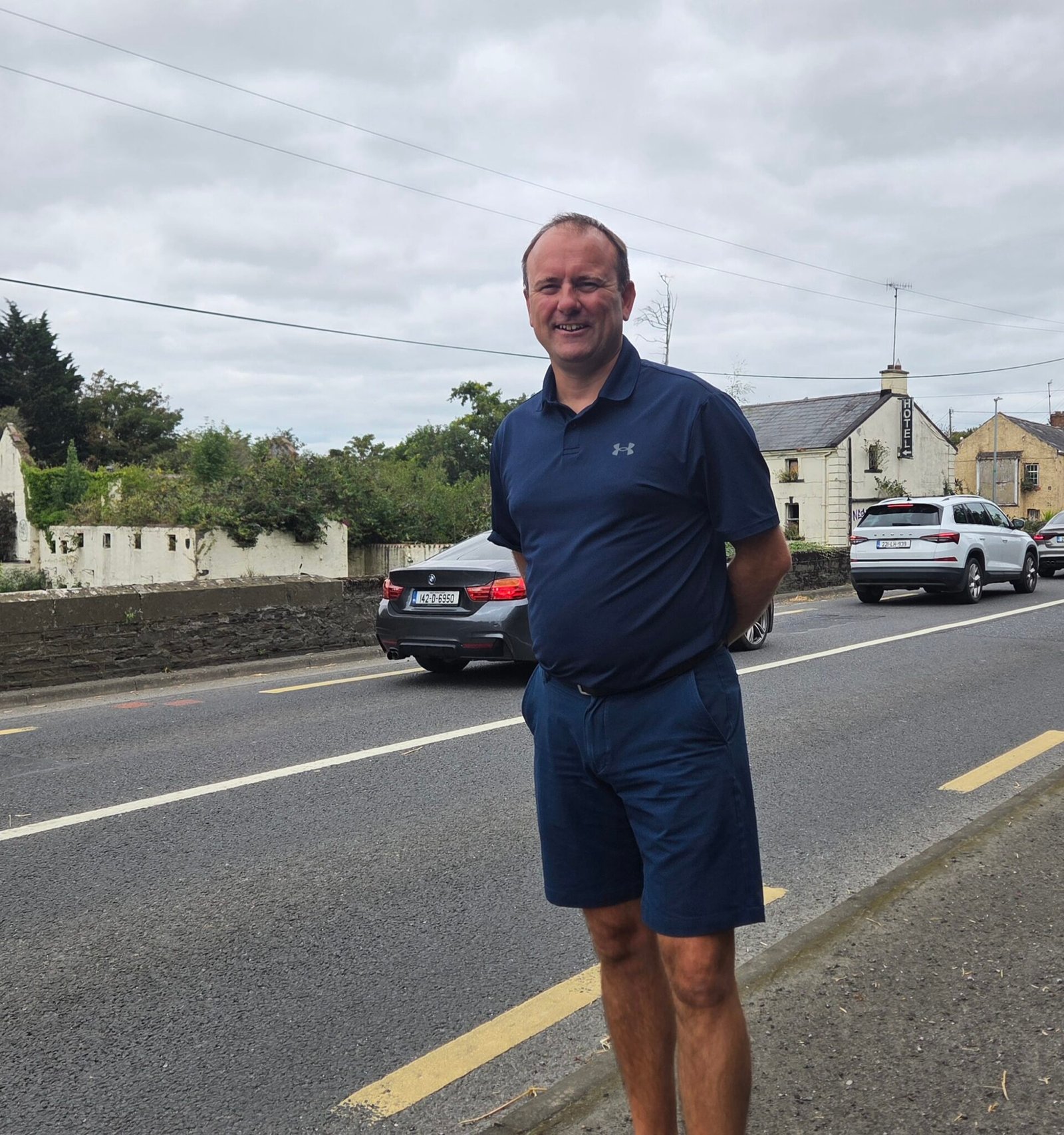
Photo: CLLR Stephen McKee