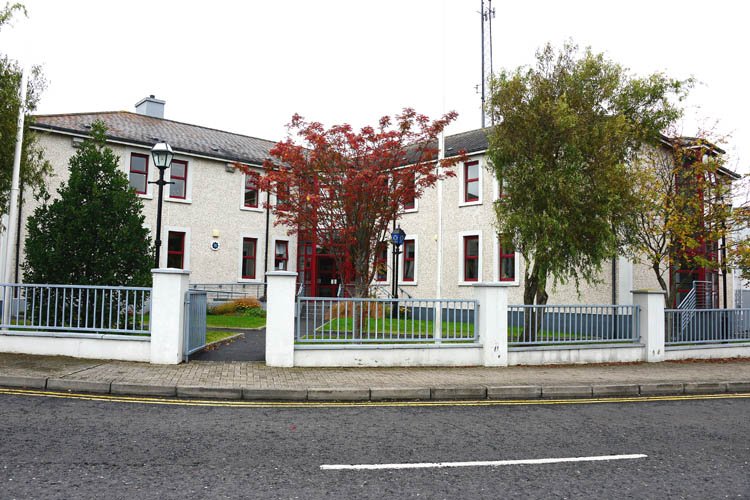
The collapse of masonry from a building at the Tholsel junction last Friday thankfully caused no injuries but led to traffic chaos around the town. In the great scheme of things it was just an unfortunate accident caused by high winds in the run up to Christmas. On the other hand it can be seen as a metaphor for a town that is literally falling down. It was not too long ago that another building at the other end of West Street came close to collapsing while most of the buildings on Narrow West Street are derelict.
A friend who had returned from a visit to Wexford Town remarked that Drogheda has the appearance of a town that is not looking after itself. He compared it to an old friend who looks “shook” and has “let himself go” with no one prepared to tell him to sort himself, never mind help him to do so. Then again why should Dundalk and Navan look after an even larger, and some would say rival, conurbation and that’s not going to change until Drogheda becomes a city with its own administration.
As it stands the biggest town in Ireland is administered by Louth County Council while entire suburbs and much of the Drogheda’s hinterland south of the Boyne is controlled by Meath County Council in Navan. This is beyond a farce and has resulted in Drogheda being largely ignored by central and local government while the town and its infrastructure continues to deteriorate. Eight years ago I was involved in a video project for the Irish Daily Mirror highlighting Drogheda’s then plight and unfortunately the situation has got much worse since.
Local Labour TD Ged Nash described Drogheda as Ireland’s “invisible city” shortly after the then government published the draft of the National Planning Framework which would dictate where jobs, infrastructure and services will go up until 2040. In the 150 pages of the document there was not one single mention of Drogheda, it was as if it didn’t exist while Newry, which is not even in the Republic, featured in the government’s future plans.
The Drogheda City Status Group has done great work down the years and when I interviewed Vincent Hoey, one of its founders, in 2017 he was hopeful that progress could be made in achieving their aims.
But eight years on this and previous governments have done absolutely nothing and it appears ministers are happy to allow Drogheda to become a huge housing sprawl, in essence a dormitory town but one without the infrastructure to facilitate an exploding population.
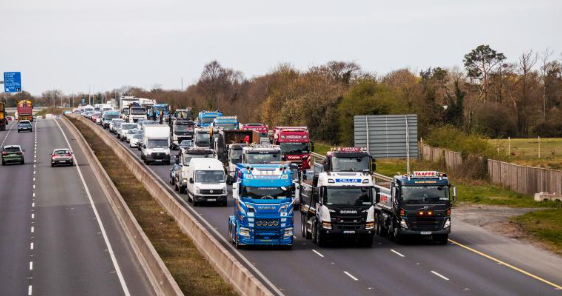
The town faces gridlock on a daily basis while the M1 motorway becomes a glorified carpark such is the congestion during the morning and evening rush hours. There has been much talk, ain’t there always, about the so-called M1 Economic Corridor linking Dublin to Belfast but poor old Drogheda is the only location along the route where a toll must be paid to get off the motorway.
It’s effectively the Drogheda tax imposed on those who want to visit the town without enduring the dreaded Dublin Road and on local people trying to cross the town to avoid the traffic jams. The removal of the toll booths, put in Drogheda and not in Dundalk for political reasons, would greatly alleviate congestion within the town but neither Fianna Fail or Fine Gael will entertain such pleas.
In the short term there will be a few Christmas crumbs thrown by the Government to appease the natives and to make it appear that Drogheda has not been forgotten. Unfortunately, unless there are radical changes, Drogheda will then again be draped in its cloak of invisibility until the next crisis or another building collapses.It might now be time for peaceful protests to highlight Drogheda’s plight and the urgent need for city status and an administration to run that city.
Breathing Life Back Into Idle Buildings
On a more positive note Drogheda and Dundalk are to be included in the Government’s Living City initiative after being originally excluded. On Tuesday Tanaiste Simon Harris announced the scheme is being expanded to cover Drogheda, Dundalk, Athlone, Sligo, and Letterkenny.
It was originally designed to cover Dublin, Galway, Waterford and Cork. It is understood that the initiative will help bring vacant and underused buildings back into use…something that is badly needed by the banks of the Boyne.
Celebrating 20 Years of Drogs Glory
Last week marked the 20th anniversary of the Drogs winning the FAI cup for the first time and if luck had been kinder to us this year we could have made the final again this year. Still it was a memorable day for United as it was the first time the club won a major competition and fans will never forget it.
What they’ll also remember was the intense cold at the RDS that day and I certainly won’t forget it as I spent the following two weeks in bed with pneumonia.
Booming Builds, Broken Promises
While there is a building boom around Drogheda and the north east can only pity young people trying to get on to the housing ladder. The Government supposedly has plans for 300,000 new homes, including substantial affordable/cost-rental apartments by 2030 but this is just pie-in-the-sky nonsense.
A new report from the Society of Chartered Surveyors of Ireland (SCSI) shows that four fifths of earners can’t afford to rent an apartment with only the top 20% of earners having the means to do so.
Worse still the Irish Times reports that many people buying an apartment now won’t qualify for Help to Buy, given that many sell for above the €500,000 threshold which means the housing crisis will get worse instead of better.
Early Houses: A Morning Ritual Remembered
Historian Tom Reilly this week lamented on Drogheda Down Memory Lane about the loss of so many of the locality’s pubs which served as social hubs for communities around the town. What has also disappeared are the “early houses” which would open at 7.30am to cater mostly for shift workers coming from the many factories in the area.
Not only have the pubs closed, so have the factories. But back in the day 8am on a Monday morning in Carberry’s on the North Strand was as lively as 8pm on a Saturday night with pints flowing freely and traditional music playing. Sadly no black stuff flows there any more, just blacked out windows.