By Paul Murphy
The mobilisation of Irish men for the British Army in the First World War 108 years ago meant that their families were left behind, and it was women who had to take on new tasks themselves, including running homes, looking after their children, running businesses or farms, and contributing to the war effort, a lecturer told a seminar in Drogheda to mark ceremonies to remember the 400 or so men from the greater Drogheda area who served in that war, with 372 names on the Cenotaph.
Dr Fionnuala Walsh, Associate Professor in Modern Irish History, was one of the speakers at a seminar organised by the Drogheda Civic Trust at the Church of Ireland conference centre in Drogheda, which was opened by the Mayor of Drogheda, Cllr Declan Power, and chaired by Cllr Pio Smith. It also included contributions from Drogheda historian Sean Collins and Dundalk historian Dr Donal Hall. Michael O’Dowd spoke on behalf of Drogheda Civic Trust.
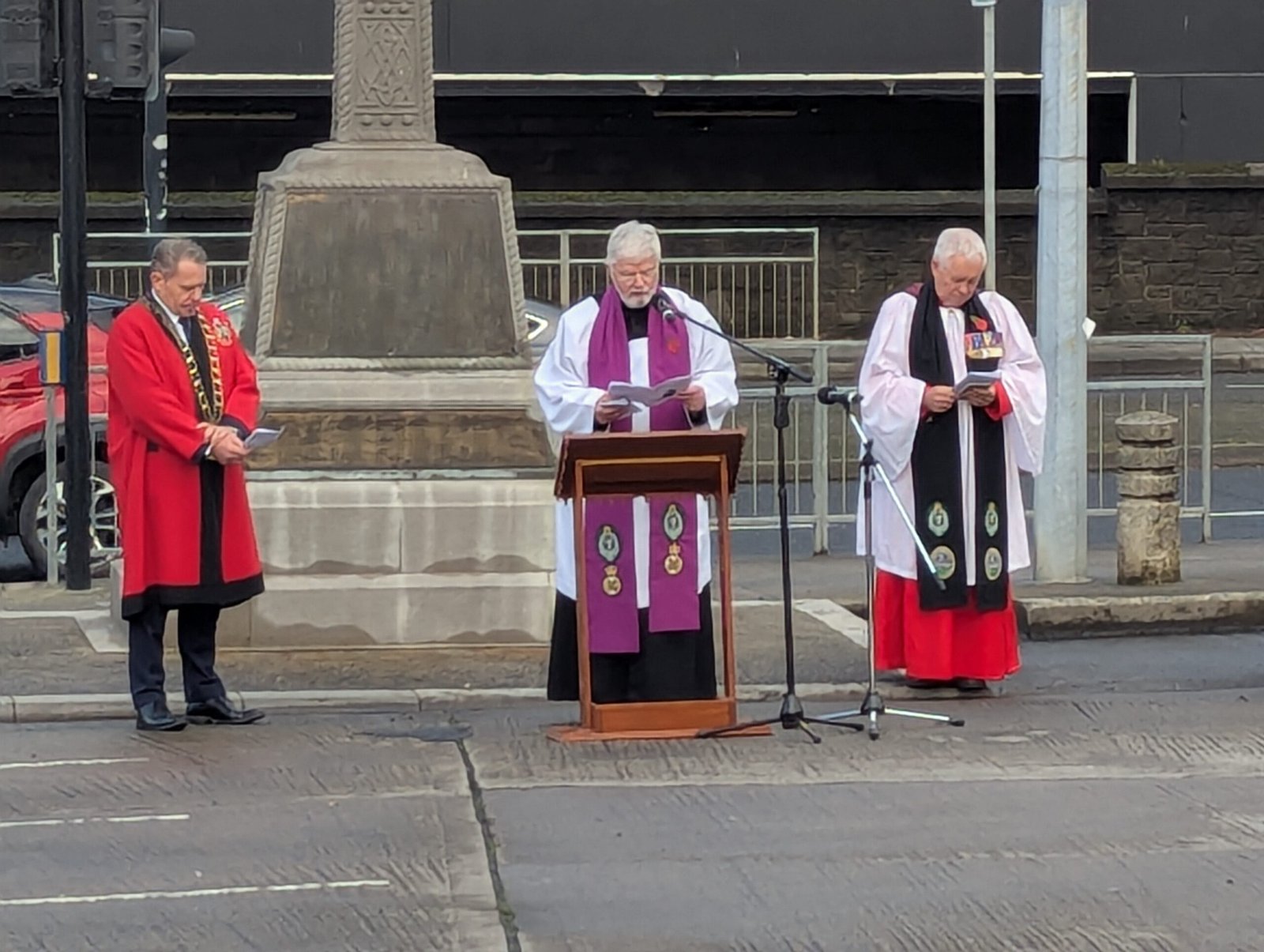
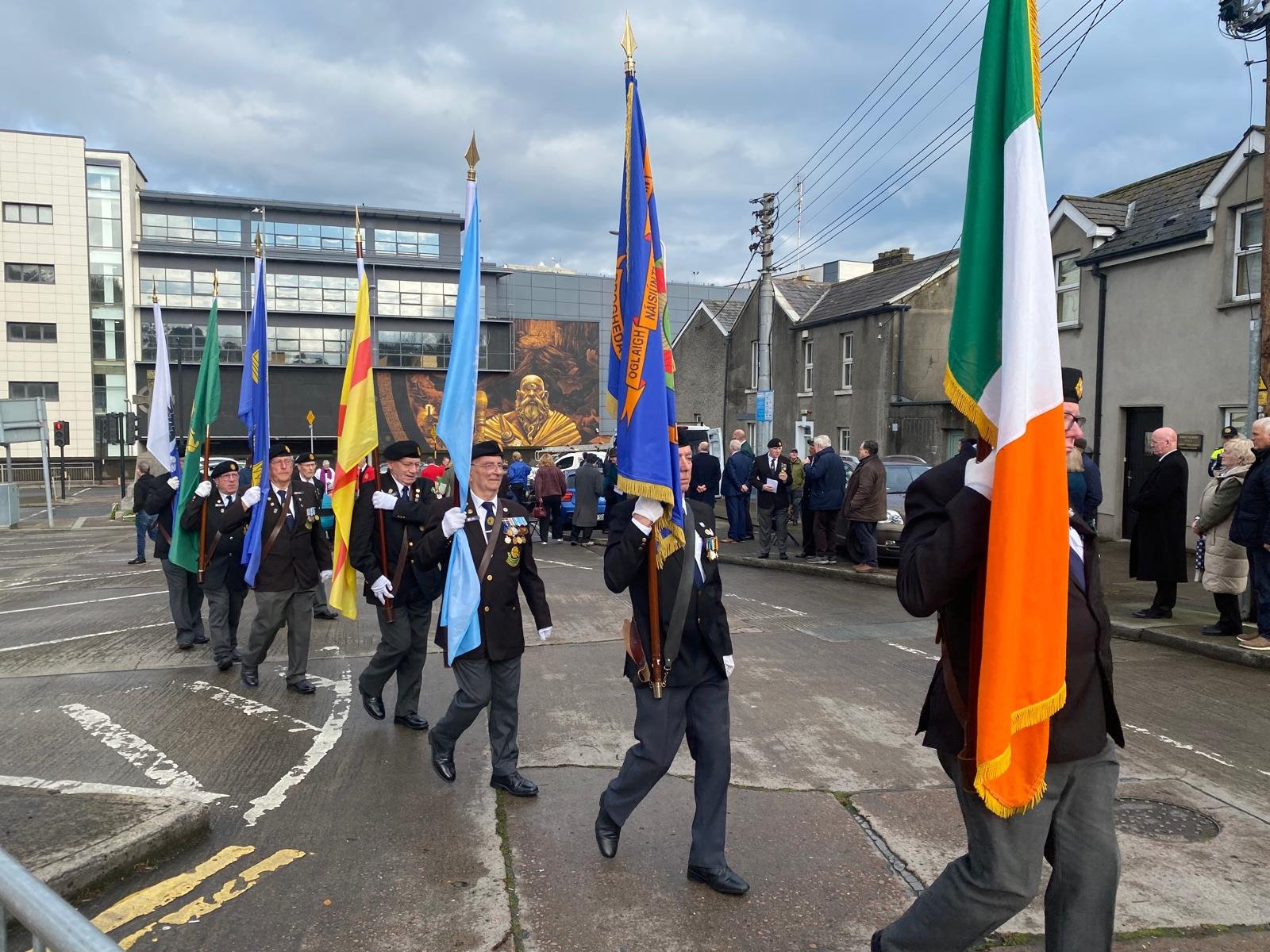
Earlier, at Mary Street, a large attendance from Drogheda, Dundalk, Laytown, Bettystown, Collon, Duleek and Northern Ireland participated in a ceremony of remembrance led by the Mayor of Drogheda, Cllr Declan Power, and organised under the auspices of Louth County Council.
Represented at the ceremony were An Garda Síochána, the Defence Forces, the Organisation of National Ex-Servicemen (ONE), Cllr Michelle Hall, Cllr Kevin Callan, Cllr Pio Smith, Donnchadha MacRaghnaill of the Old Drogheda Society, Senator Alison Comyn and Drogheda Brass Band.

Clergypersons led a religious ceremony and wreaths were laid by a number of representatives, including Rosita Shorter of the Royal British Legion.
A minute’s silence was observed, and The Last Post and Reveille were played by Neal O’Kennedy, principal cornet player with Drogheda Brass Band. Singer-songwriter Stephen McArdle provided music at the conclusion of the ceremony.
Dr Walsh told the seminar that there was no conscription in Ireland at the time, and all those who joined the army were volunteers.
In parallel, thousands of Irish women became involved in activities to support the home front, including women who nursed wounded soldiers at home or overseas, supported the influx of Belgian refugees, collected sphagnum moss for surgical dressings, as there was a shortage of cotton wool, fundraised for specific regiments and prepared parcels of food for soldiers at the front or prisoners of war.
Women from all classes, religious and political backgrounds participated in these activities.
Across the island of Ireland, over 13,000 women became involved in a joint committee of the British Red Cross and St John’s Ambulance Association. Many served overseas at the front, but many also served in hospitals in Britain and Ireland.
She gave the example of Margaret Lyons, in her early 20s and from a humble Catholic farming background around Drogheda, who volunteered with the Red Cross helping to make clothes.
In contrast, Judith and Julie Byrne from Rossmakea, Dundalk, served in a nursing role with the Co Louth Red Cross Auxiliary Hospital and then moved to the Curragh military hospital in Kildare, later serving in a hospital in Italy.
They came from a more prosperous Catholic farming background, indicated by the fact that the 1911 census showed that they had servants.
However, there were also rumblings of discontent among the population because of shortages of food and inflation.
The Catholic Bulletin noted that the wealthy could indulge in many luxuries while the poor could not afford basic necessities.
A woman was thrown out of a recruitment meeting in Mayo when she interrupted speakers about wartime inflation and the shortage of flour. “You need to do something about the cost of food on the home front if you want to take our men away.”
Dr Donal Hall told the audience that 4,500 men from Louth served in the British army, of whom 900 died. Their deaths would have impacted up to 5,000 lives here, he said.