The Drogheda ancestry of new British Prime Minister Andy Burnham has prompted a local call for Westminster to reconsider the prominent position of its statue of Oliver Cromwell.
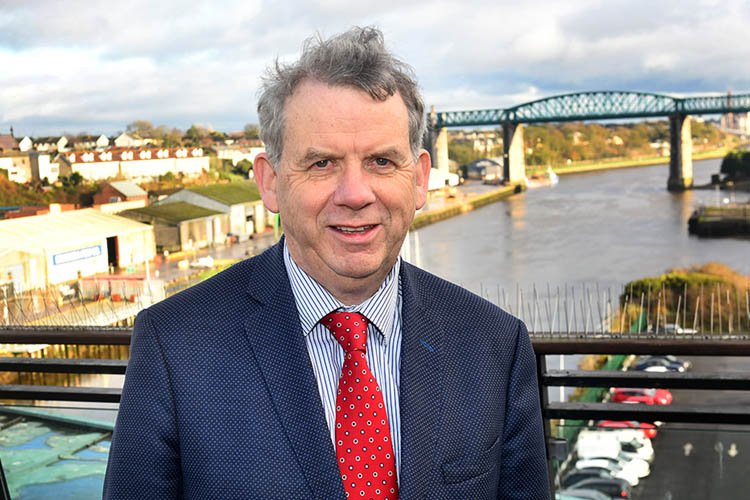
Michael O’Dowd, Aontú member and Director of Drogheda Civic Trust, described the rise of a Catholic descendant of a Drogheda man to Britain’s highest political office as “one of history’s great ironies”.
Burnham’s great-grandfather, Edmund “Ned” Burke, came from Drogheda before emigrating with his family to Liverpool, a connection the Prime Minister has spoken about publicly. Burnham was also raised Catholic.
“Oliver Cromwell must be spinning on his pedestal,” O’Dowd said.
“More than 350 years after Cromwell’s forces brought slaughter to Drogheda, a man with Drogheda connections, raised Catholic, is now Prime Minister of Britain.

“The irony could hardly be greater.”
Cromwell’s legacy in Drogheda
For Drogheda, Cromwell’s name remains closely associated with one of the darkest episodes in the town’s history.
His Parliamentarian forces captured Drogheda in September 1649 following a siege, with large numbers of defenders and civilians killed during and after the assault.
The precise number of deaths and the circumstances surrounding them remain the subject of historical debate, but the ferocity of the attack is not disputed.
A bronze statue of Cromwell has stood outside the Palace of Westminster since 1899. Created by sculptor Hamo Thornycroft, it stands on Cromwell Green beside Westminster Hall.
O’Dowd believes its position should now be reconsidered.
“Cromwell’s statue still stands in a place of honour at Westminster. For Drogheda, however, his name is inseparable from the massacre of 1649 and the brutality of the Cromwellian campaign in Ireland,” he said.
“This is not about erasing history. Cromwell should be remembered and studied. But there is a difference between remembering a historical figure and honouring him with a statue at the heart of British democracy.”
‘A moment to reconsider’
O’Dowd said Burnham’s arrival in Downing Street provides an opportunity to reopen the debate around the statue.
“Perhaps the arrival of a Prime Minister with such strong Drogheda and Catholic connections is the perfect moment for Westminster to finally reconsider Cromwell’s pedestal,” he said.
“History has turned full circle, and Cromwell would surely be spinning.”
O’Dowd expanded on his argument in an article published by IrishCentral, where he said any reconsideration of the statue should begin with education and a fuller public understanding of Cromwell’s record in Ireland.
He argued that removing Cromwell from a position of honour would not amount to erasing history, and suggested that a museum setting could allow the full complexity of his political and military legacy to be presented.
O’Dowd also pointed to Burnham’s previous approach to debates about controversial monuments in Greater Manchester, where he advocated public discussion rather than simply removing statues without consultation.
A direct connection between Drogheda and Downing Street
Burnham became British Prime Minister on 20th July following the departure of Keir Starmer.
His family link to Drogheda had already attracted local attention before he entered Downing Street.
O’Dowd said that ancestry does not place any obligation on Burnham to adopt a particular view of Cromwell, but believes the historical circumstances make this an appropriate moment for a wider discussion in Britain.
His IrishCentral article concludes that Cromwell should continue to be remembered and studied, while questioning whether a position of honour outside Westminster remains appropriate.