By Paul Murphy.
The owner and 137 staff of Co Meath’s historic Ballymagarvey House pride themselves on professionalism, warmth, hospitality and making everyone feel at home, its owner Vincent Callan said on Sunday.
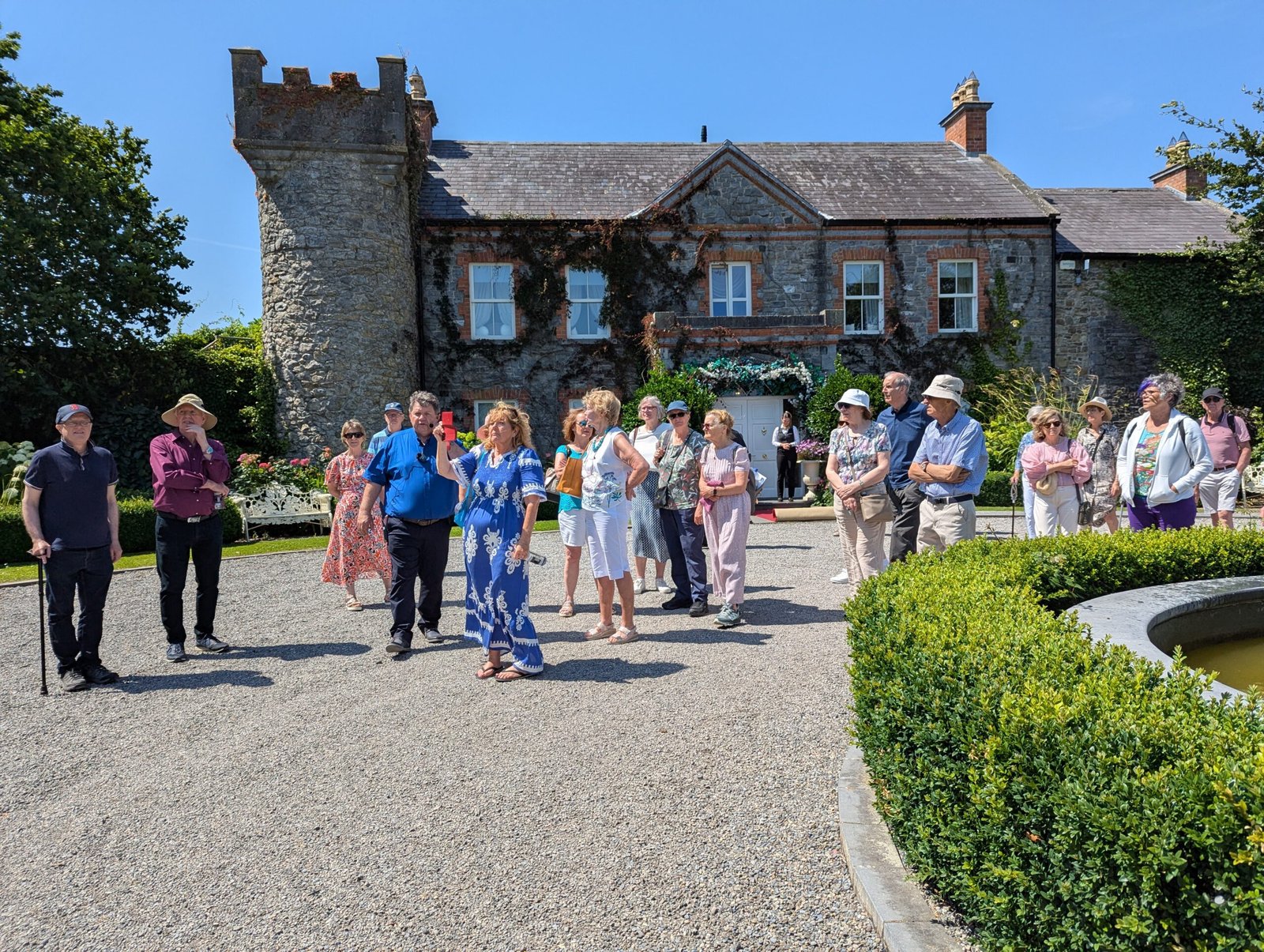
He was speaking during a visit to the leading wedding and event destination by his guests, 50 members of the Navan and District Historical Society who had a Summer outing there on Sunday.
The 800-year-old Ballymagarvey House, now operated as Ballymagarvey Village, was purchased by Mr Callan in 2003 and now has a turnover of €11 million a year. A total of 34,000 attended wedding at the venue this year. Twenty three per cent of those guests were non-Irish, Mr Callan said, bringing in valuable and “substantial” tourism revenue to Co Meath. “People come from all over, North America, South America, Dubai. The advent of Tik Tok has shown that people search for specialist wedding venues. They find this lvely place in Co Meath and they get 100-150 people on a plane, arrive in Dublin, spend two nights here at Ballymagarvey and then they have a tour of Ireland for the rest of their holiday – so they have their wedding and their vacation all in one”.
“When I started here, I had no idea that 34,000 people would be coming to visit here, and I have to tell you they love what they see here. They love the homeliness, the old-fashioned nature of what they find. We have here a shared pride in what we are doing. It’s very much run on a family basis”.

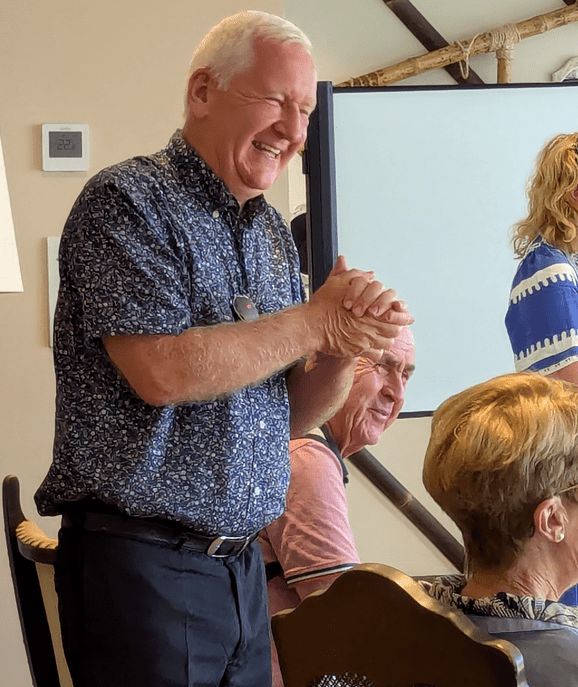
Pauline Rowe, a committee member of the society, made a presentation to Mr Callan on behalf of the members.
In a history talk to society members, its chairperson Paschal Marry said that Alexander Crockett was an inspector for the Department of Agriculture who owned and farmed the Ballymagarvey Estate during the 1920s. The estate was purchased by Vincent Callan in 2003 and meticulously restored by him. The origins of the estate span over 800 years. Originally a medieval settlement it was later an 18 th century flax mill village. The land’s history dates back to the 13 th century when Princess Gwenllian ap Iorwerth, daughter of the Welsh King Llywelyn the Great, married the Norman-Irish Lord William de Lacy. Following William’s death in 1233 Gwenllian inherited the estate and managed it as a businesswoman and landowner during a turbulent time. The medieval tower and church on the estate which feature Anglo-Norman stonemasonry and a rose window, date back to this period. Alongside the ruin is an ancient graveyard that contains the Balrath Cross, a 16 th century wayside cross moved to the site from Balrath crossroads.
The estate was once a thriving flax and corn mill village in the 18 th and 19 th centuries. In recent years, the former mill village including it stone outbuildings, granaries and the schoolhouse have been lovingly restored