

Ray Donagh
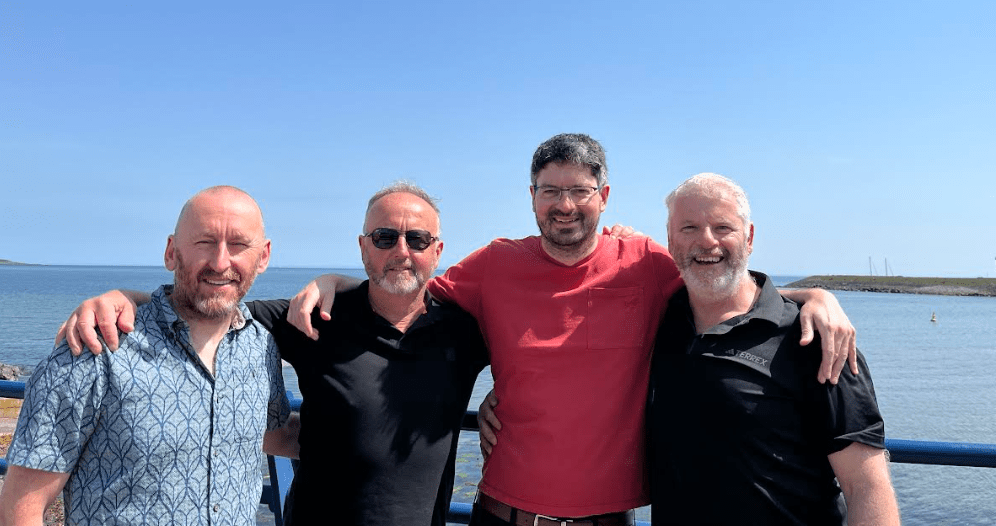
Photo: Martin Gaynor, Paul Clinton, Blake Boland, and Peter Farrelly.
On 24 June, four Drogheda swimmers achieved one of the toughest feats in open water swimming after successfully completing the infamous North Channel relay. Paul Clinton, Blake Boland, Peter Farrelly, and Martin Gaynor battled freezing waters, powerful tides, and relentless conditions for more than 13 hours before reaching the Scottish coast, earning their place among the small number of athletes to have conquered one of the world’s most challenging channel swims.
Two years after testing their limits in the English Channel, the four-man relay team successfully completed what many open water swimmers regard as the ultimate “Swimming Everest”. The team officially completed the gruelling 35-kilometre crossing, although strong currents, tides and winds meant they actually covered closer to 42 kilometres before reaching the Scottish coast after 13 hours and 27 minutes at sea.
The swimmers were guided by the expert crew from Infinity Channel Swimming, led by pilot Jack and co-pilot Jan, whose experience proved invaluable throughout the crossing.

The North Channel, which stretches between Donaghadee in County Down and the Mull of Galloway in Scotland, is regarded as one of the toughest open water swims in the world. It is notorious for its powerful currents, icy water, unpredictable weather and the presence of Lion’s Mane jellyfish.
The achievement was the culmination of an intense year-long training programme. The team combined relentless pool sessions to build endurance and fitness with countless hours in the cold open waters at Clogherhead, allowing their bodies to adapt to the harsh conditions they would eventually face. Careful attention was also paid to nutrition in the months leading up to the challenge.
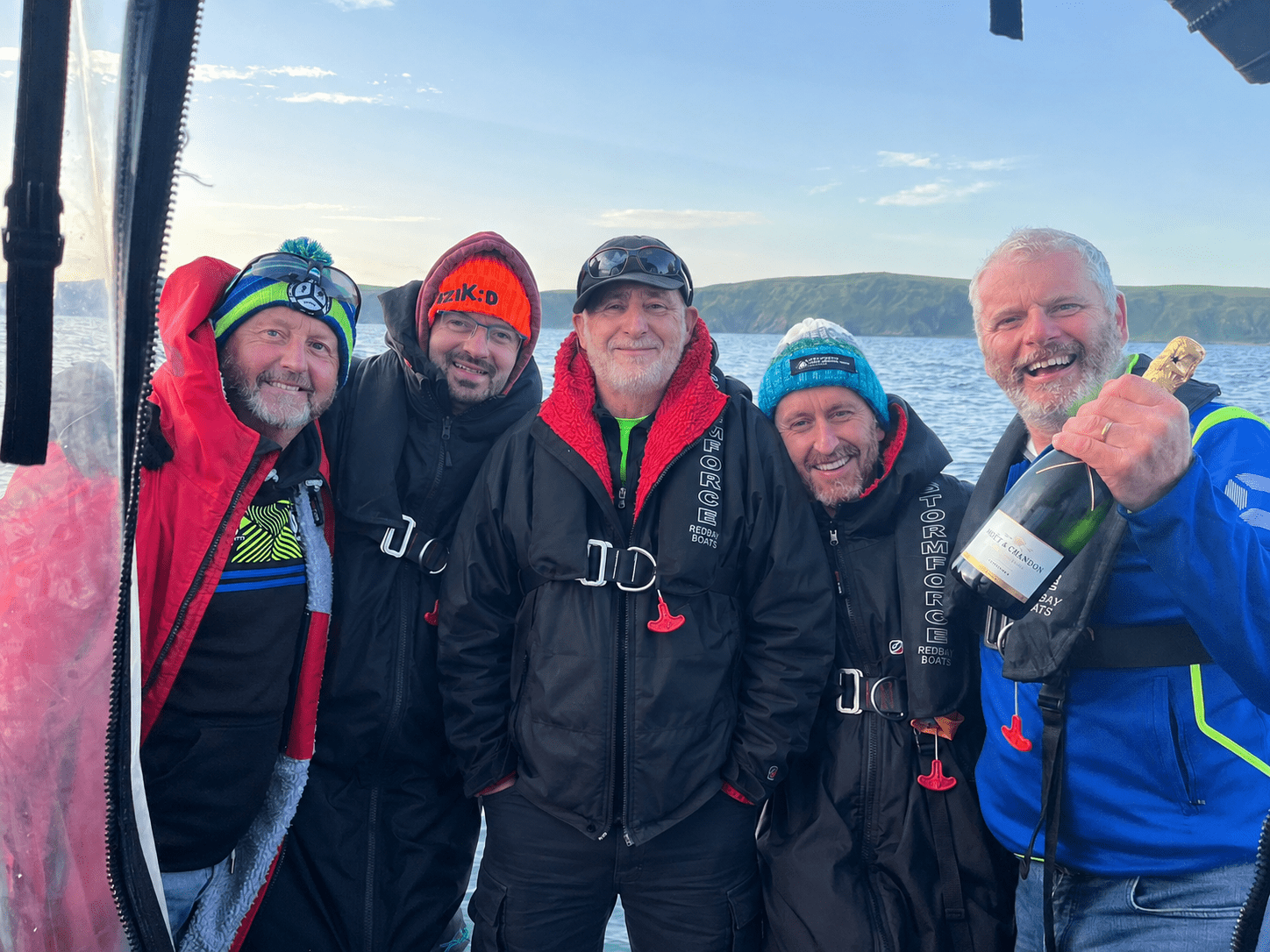
Photo: Paul Clinton, Blake Boland, coach Ray Donagh, Martin Gaynor, and Peter Farrelly.
Before they were even permitted to attempt the crossing, each swimmer had to complete a mandatory continuous two-hour swim in sea temperatures of 14 degrees Celsius or below to demonstrate they could cope with prolonged exposure to cold water and the risk of hypothermia.
That preparation proved essential as water temperatures during the crossing dropped below 12 degrees Celsius in places, pushing the swimmers close to their physical limits.
The challenge was made even more demanding by the strict rules governing official channel swims under the ILDSA. Wetsuits and any heat-retaining clothing are prohibited, leaving swimmers with only a standard swimsuit, a single swim cap and goggles for protection against the cold.
Each member of the relay swam for exactly one hour before handing over to the next swimmer in a continuous rotation. The order could not be changed and, under the rules, if one swimmer failed to complete their hour or touched the support boat, the entire relay attempt would have been disqualified.
While the North Channel is also famous for huge swarms of Lion’s Mane jellyfish, fortune smiled on the Drogheda team. The jellyfish remained deep below the surface, allowing the swimmers to focus on battling the freezing temperatures, strong winds and shifting tidal currents that constantly pushed them off course.
The flawless execution of the relay reflected the countless hours of preparation that had gone into the challenge. For Paul Clinton and Blake Boland, the crossing marked the next chapter in their open water journey following their English Channel success, while Peter Farrelly and Martin Gaynor completed a team determined not to leave Scotland without finishing what they had started.
When the final swimmer, Paul Clinton, emerged from the water and stood on the rugged Scottish shoreline, as required under official channel swimming rules to stop the clock, the team’s finishing time was confirmed at 13 hours and 27 minutes.
The achievement places the four swimmers among the select group of athletes who have successfully crossed one of the toughest sea channels in the world. It is often said that more people have stood on the summit of Mount Everest than have successfully completed the North Channel crossing.
The team, known as the Channel Chancers, has now completed two of the legendary Ocean’s Seven swims, widely regarded as the swimming equivalent of the Seven Summits in mountaineering. The Ocean’s Seven challenge consists of the English Channel, the North Channel, Catalina Channel in the United States, Molokai Channel in Hawaii, Cook Strait in New Zealand, Tsugaru Strait in Japan and the Strait of Gibraltar.
Reflecting on their latest achievement, the swimmers said none of it would have been possible without the unwavering support of their families, whose encouragement throughout months of demanding training made the challenge possible.
With two Ocean’s Seven crossings now complete, only five remain. Wherever the Channel Chancers head next, their remarkable North Channel success has already secured its place as one of Drogheda’s greatest open water swimming achievements.