
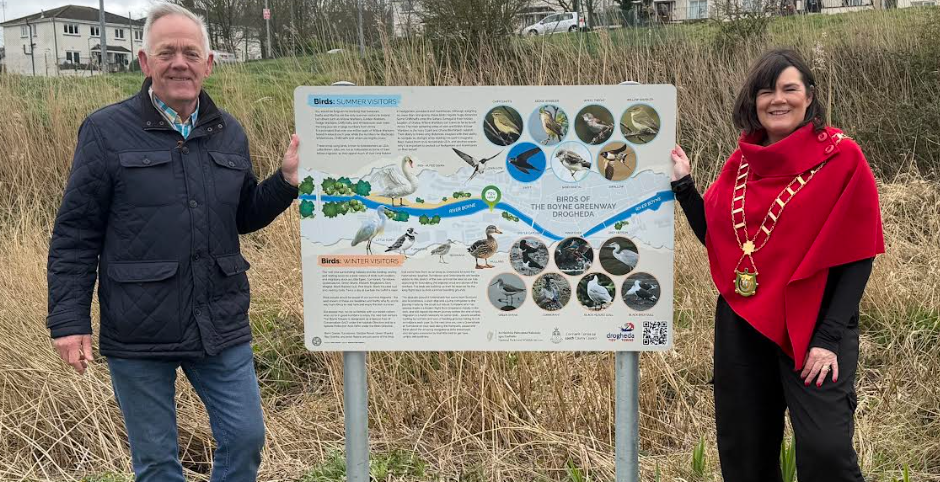
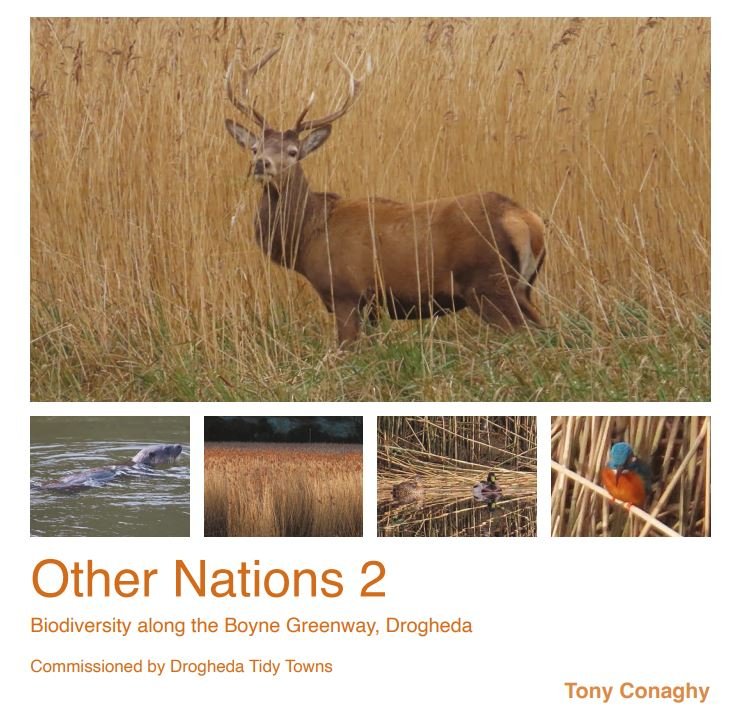
Louth County Council and Drogheda Tidy Towns have unveiled four new biodiversity information panels along the Boyne Greenway in Drogheda, highlighting a major ecological study carried out by local environmentalist Tony Conaghy.
The panels are located along a 2.5km stretch between the Mary McAleese Bridge and the Bridge of Peace, with one on the north side of the river and three on the south. They feature findings from Other Nations 2 Biodiversity Along the Boyne Greenway, which documents the range of plant and animal life in the area.

The installation follows eight months of fieldwork by Tony Conaghy, who studied the tidal waters, woodlands, grasslands and marshlands along the Boyne, recording more than 150 species of birds, mammals, insects and plants.
The original study described its aim as “to encourage awareness and appreciation of the beauty and complexity of our natural surroundings.”
The new panels have been developed by the Drogheda Tidy Towns Biodiversity Subgroup to make this information more accessible to people using the Greenway, allowing walkers and visitors to better understand the habitats around them.
Each panel highlights a distinct habitat recorded in Other Nations 2, allowing walkers to encounter the Boyne’s biodiversity exactly where it thrives.
Located near Yellow and Grove Islands, the Woodlands panel introduces the rare alluvial woodland found there, one of Ireland’s rarest native woodland types and a designated Special Area of Conservation (SAC).
It describes how willows, alder, mosses, fungi and lichens come together to form a rich, ancient ecosystem. As the study notes, the islands “were formed over a long period by the build-up of alluvial sediment, allowing water-loving plants to get a foothold.” The panel also outlines the woodland’s importance for carbon storage, flood protection, and supporting wildlife.
Celebrating both summer and winter visitors, the Birds of the Boyne panel highlights swallows, sand martins, kingfishers, turnstones, and more. It explains the Boyne Estuary’s status as both an SAC and Special Protection Area (SPA), echoing the publication’s description of the river as “a haven… for migratory birds.”
Located near the extensive reed beds on the north side of the Greenway, the Marshlands panel explores the habitat home to otters, red deer, dragonflies, sedge warblers, and diverse wetland plants. Tony’s study notes that wetlands “improve water quality, store floodwaters, and act like natural sponges.” The panel highlights why these habitats are vital for biodiversity and climate resilience.
Celebrating the hedgerows that line the Ramparts, the Hedgerow panel explains their role as wildlife corridors for foxes, badgers, bats, pollinators, and songbirds. Reflecting the study’s findings, it notes that hedgerows “provide food and shelter, and are a vital part of our rural landscape.”
Cllr Michelle Hall, Mayor of Drogheda, said: “These panels are a wonderful addition to the Boyne Greenway and a reminder of the extraordinary biodiversity that surrounds us every day. Tony Conaghy’s work has captured the magic and fragility of the Boyne, and now walkers, runners, and families can enjoy these insights right along the route. This is a brilliant example of local partnership delivering something meaningful for our community.”
Gerry Leydon, Chair of Drogheda Tidy Towns, said: “Drogheda Tidy Towns would like to extend warm thanks to Tony Conaghy for this great work and to Louth County Council, who supported the financing through the Louth Tidy Towns Grant Scheme, and the Operations team who installed the panels. On your next stroll along the Boyne, take a moment to stop, read and enjoy the incredible biodiversity on our doorstep.”
David Conway, Chief Executive of Louth County Council, said: “Louth County Council is delighted to support this project, which enhances the Greenway experience and strengthens our commitment to protecting the natural environment. These panels help make science accessible to everyone and highlight the unique habitats that make the Boyne such an important ecological corridor.
“I would like to thank Drogheda Tidy Towns for initiating this project. We look forward to continuing our collaboration with them and other local community groups on projects that promote sustainability and appreciation of nature in our county.”
For more details on Drogheda Tidy Towns, visit https://droghedatidytowns.com/