
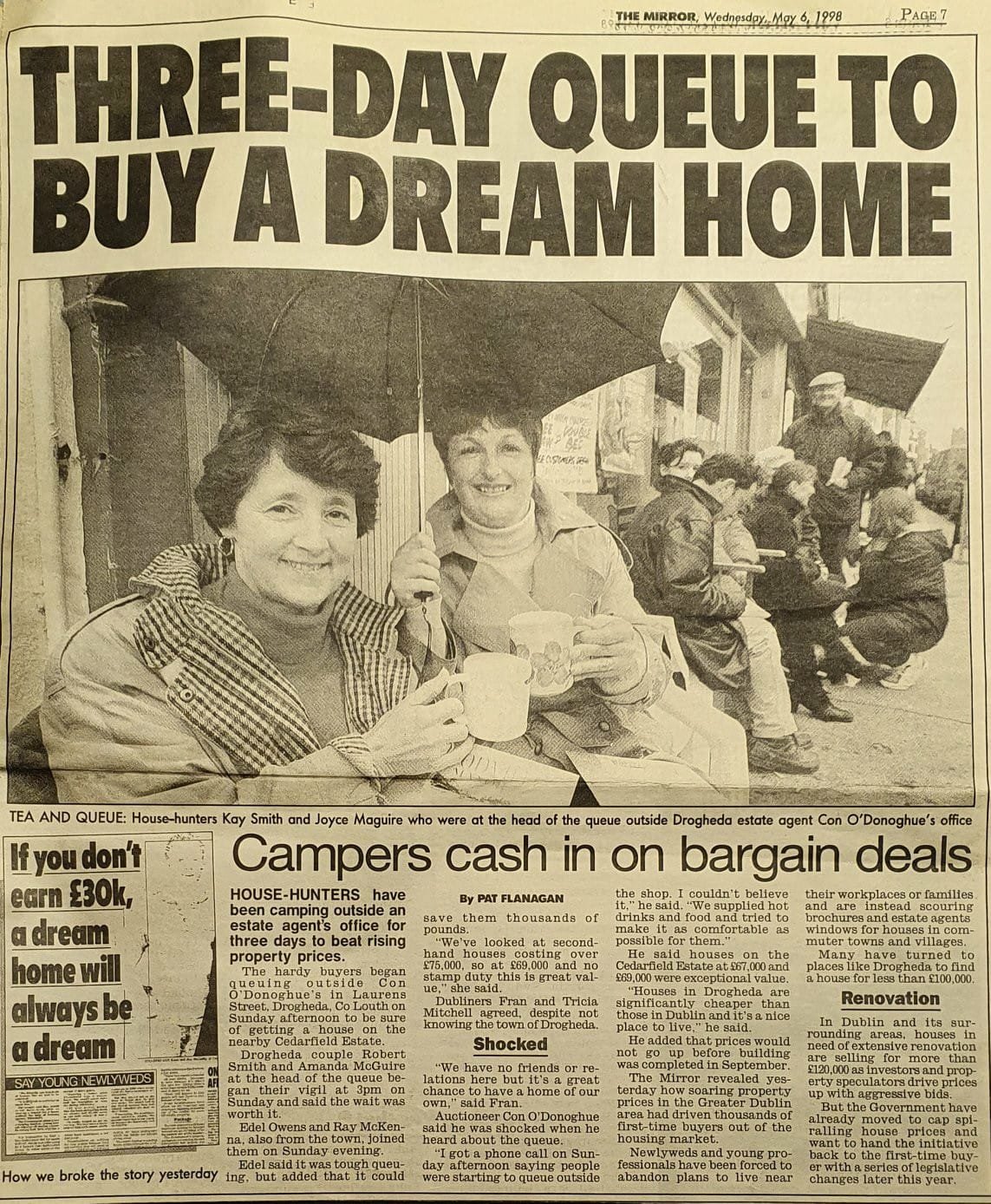
It’s hard to believe that you could buy a newly built house in Drogheda in the not too distant past for IR£67,000 or just over €85,000 in today’s money.
One of my first jobs with the Daily Mirror was to report on the remarkable story of dozens of people camped outside Con O’Donoghue’s auctioneers on Laurence Street.
Some were so determined to put down a deposit on newly built houses in Cedarfield, on the market for £67,000 and £69,000, that they queued for three days.
Young people today trying to get on the property ladder, and I know plenty of them, are entitled to ask how a situation came about where a generation will probably never own their own home.
That was May 1998 and the historic Good Friday Agreement had just been signed. There was optimism in the air, along with worries about rising house prices, but no one could have predicted what was to come in the following years.
In the same article, I reported that the then Fianna Fáil government was claiming it was going to take measures to cap spiralling house prices to help first time buyers. That worked out well.
This week, figures from the Central Statistics Office revealed that the median price of buying a home in this country was €387,000 last year. In Dublin, it was €500,000.
Far from controlling house prices, in the years following that article the cost of property went into orbit, fuelled by what can only be described as bonkers bank lending.
Then came the financial crash, when some properties halved in price, bankrupting many who bought multiple properties and causing devastation for hundreds of thousands of families.
I started writing a column for the Mirror in 2006 when the Celtic Tiger was roaring and, in the following two years, wrote several pieces, as did many others, warning that both lending and house prices were out of control.
Around that time, I recall overhearing a man boasting in McPhail’s pub about buying an apartment, his third, for €280,000.
He was a factory worker turned property speculator and just one of many who imagined the good times would go on forever, with property endlessly bought using interest only loans.
The madness not only continued, it was encouraged, with then Taoiseach Bertie Ahern infamously claiming in 2006 that “the boom times are getting even boomer”.
The boom was nothing more than a housing bubble and, like all bubbles, it burst. When it did in 2008, it ushered in the worst recession in the history of the State, which we are still paying for.
The Universal Social Charge on your wages, supposedly an emergency measure at the time to rescue the State’s finances, should act as a stark reminder of the catastrophic damage a property bubble can cause the economy.
A lot has changed since the days when people queued outside Con’s auctioneers. Now locals and people from all over the world are outbidding each other for the few grossly overpriced properties that are on the market.
While property prices are booming, rents are even boomier, as Bertie might say. Who can argue with that when a four bedroom terraced house on Boyle O’Reilly Terrace will set you back €3,250 a month.
While house prices may continue to rise indefinitely, there were two stories this week that should act as a warning that history could well repeat itself.
During the Celtic Tiger years there was an overdependence on stamp duty from inflated house prices to fund the country. Now it is corporation tax, but yesterday the State’s fiscal watchdog estimated that almost half of that tax, €13 billion, comes from just three multinationals. Mr Trump won’t like that.
The other story was even more alarming, as CSO figures showed that house prices are now 25 per cent above their highest level at the peak of the property boom in April 2007, a year before the crash.
If it was a bubble back then, is it an even bigger bubble now, and if so, when will it burst?
Some genocides matter more than others
A UN fact-finding mission has determined that evidence of atrocities carried out during the siege and takeover of the Sudanese city of el-Fasher points to genocide. Tens of thousands slaughtered and millions displaced and no protests.
China has committed genocide against the Uyghur people in Xinjiang using enforced sterilisation to wipe out the population, a UK-based tribunal has found yet the Taoiseach visits that country and there are no protests.
Nigerian Christians are being slaughtered in their thousands while the persecution of Christians in other parts of the world are near “genocide” levels, a report ordered by then British Foreign Secretary Jeremy Hunt found. Where’s the protests?
To borrow from George Orwell…all genocides may be equal, but it seems some are more equal than others.
From dancefloor to nursing home
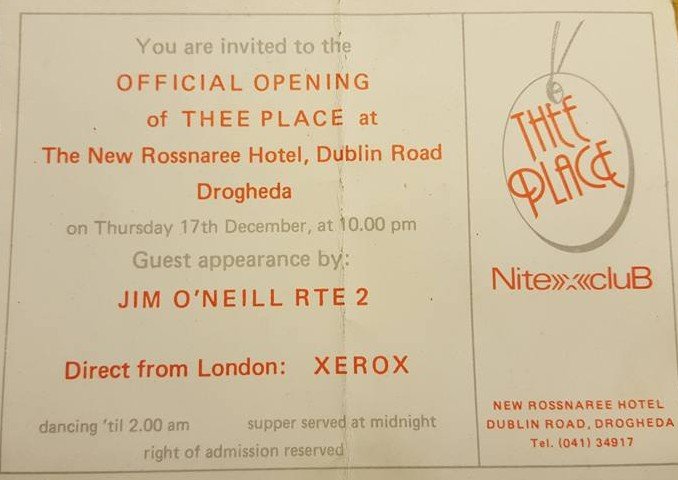
I was obviously at the official opening of Thee Place as I still have the invite to the long lost nightclub.
It really was the place to be back in the day and it was common to see queues outside the old Rossnaree Hotel as eager clubbers waited to get in.
I was never a great one for dancing but it was a well run venue when local businessman Vincent McDonnell was in charge and handy for a late drink after the pubs closed.
The Rossnaree is long gone and the Moorehall Lodge Drogheda nursing home occupies the site where it once stood.
It’s more than a little poignant that some of those who once danced in Thee Place may at some time have to avail of the Moorhall’s services.