

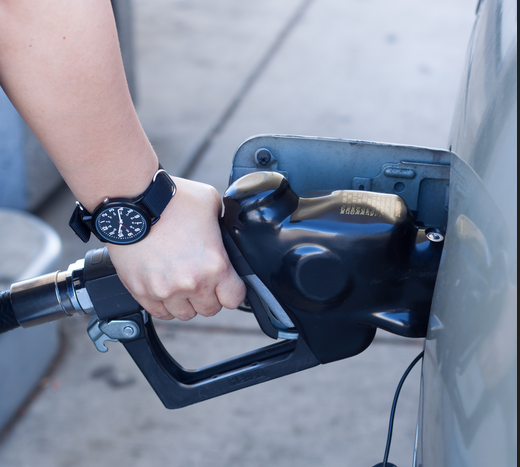
Labour TD Ged Nash has said the Government is missing an opportunity to better support people with rising energy costs, despite planned reductions in fuel excise duties. The Drogheda based TD was responding to proposals from Finance Minister Simon Harris to reduce the cost of petrol and diesel in light of increasing global energy pressures linked to the war in Iran.
Deputy Nash said the measures will offer some relief but believes more could be done, particularly around public transport and remote working. He suggested a 10 per cent reduction in public transport fares to encourage people to leave their cars at home and use buses, trains, and trams instead.
He also said expanding opportunities for remote working would help reduce commuting costs for many families.

Deputy Nash said:
Labour supports the temporary reduction in excise duty on diesel and petrol as a necessary step to ease the immediate pressure on hard pressed motorists in the face of rising global instability and energy costs.
However, this cannot be the extent of the Government’s response. We need to cut the cost of the commute permanently and where possible, we should cut out the commute. The reality for workers and families across the country is that the cost of living remains stubbornly high and many people are still struggling to make ends meet.
Thanks to Fine Gael’s decision to cut sales tax for burger barons instead of letting workers take the full value of small pay rises in 2026, home, the situation for working families was already bad.
The response needs to be a mix of financial measures for commuters, targeted support for workers and small businesses, and clear policy interventions that reduce costs for the long-term. We are calling for a 10% cut in public transport fares to provide real and immediate relief to those who rely on buses, trains and Luas services every day and the suspension of future toll hikes, as was done in 2022. Public transport must be a viable and affordable alternative to driving, particularly at a time when fuel prices are volatile and household budgets are under severe strain.
While cutting the cost of the commute is welcome, ending the commute is better. We need a real focus on enabling people to work from home where possible. Remote working has proven benefits for workers, for families and for the wider economy. It reduces commuting costs and eases pressure on transport networks. Yet too many workers are now being required to return to the office without justification, increasing their daily costs and adding to congestion.
The government must lead by example. There should be a renewed and clear mandate across the civil and public service to support working from home wherever roles allow. By doing so, the Government can set the standard for the private sector and ensure that workers are not penalised by being forced into costly daily commutes. Instead of outright opposition to Labour’s remote work legislation, we need the government to work with us on it.
This is a moment that demands more than short term measures. The government must act decisively to reduce costs, support workers and give people real choices in how they live and work. That means cutting public transport fares and expanding remote working. Labour will continue to press for these measures and for a fairer, more sustainable approach to the cost of living crisis.”
The Government measures include a temporary reduction in excise duty on fuel, with diesel reduced by 20 cent per litre and petrol by 15 cent until the end of May. The changes come into effect at midnight.
Meanwhile, Fine Gael TD Paula Butterly said the measures would provide important support to households and businesses. She said pensioners, carers, and people with disabilities would receive additional help with heating costs.
Deputy Butterly said:
The support announced today will come as a welcome relief to so many in Louth. There will be a 20 cent reduction in excise duty on a litre of diesel, 15 cent on a litre of petrol, and a 3 cent cut in excise on a litre of marked gas oil (green diesel) until the end of May.
We’ll also see the NORA (National Oil Reserves Agency) levy of 2 cent on a litre of petrol, diesel and home heating oil paused for two months.
All transport users in Louth, commuters, businesses and farmers, will benefit from these steps.
For hauliers here will be an enhanced diesel tax rebate scheme that will be backdated to January to help keep supply chains functioning for Louth and beyond.
I’m also glad to see a four-week extension to the fuel allowance, which will see 470,000 households get continued help with their home heating.
All reductions on excise will come into force tonight, and the NORA levy will come into effect on April 1st, once it has been passed by both the Dáil and Seanad.
This package will be a significant help to commuters, families, businesses, and hauliers in Louth, concluded Deputy Butterly.