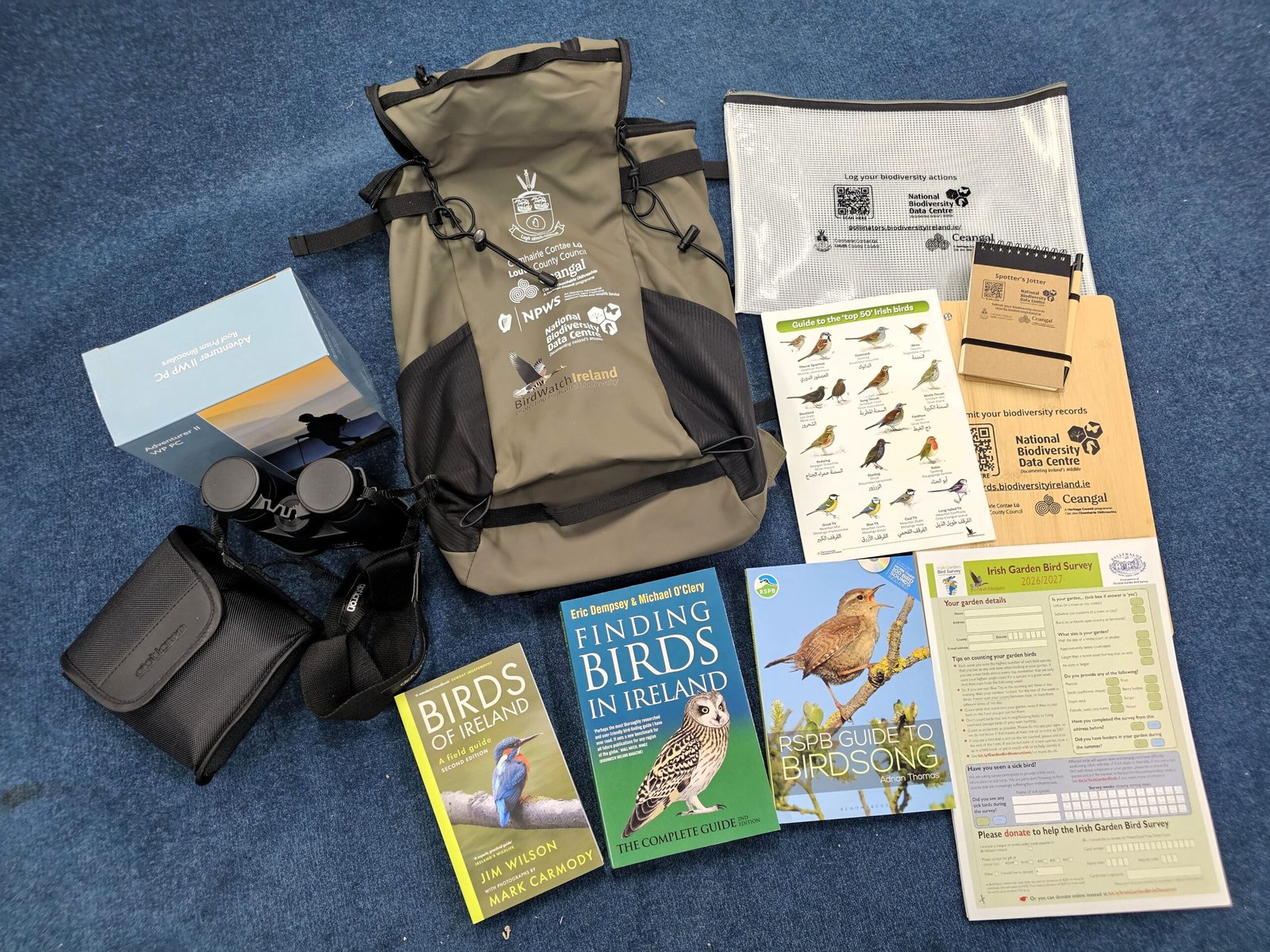
Louth County Council’s Borrow a Bird Watching Bag contains binoculars, bird identification guides, and recording materials and can be borrowed free of charge through the Library Service.
People across County Louth can now borrow birdwatching equipment free of charge through a new initiative launched by Louth County Council.
The Borrow a Bird Watching Bag scheme was launched at Dundalk Library and aims to encourage people of all ages to get outdoors, discover local wildlife and learn more about the birds living in their communities.
Each bag contains binoculars, bird identification guides and recording materials, allowing beginners and more experienced birdwatchers to explore the county’s birdlife without having to purchase their own equipment.
The initiative has been developed through a partnership between Louth County Council’s Biodiversity Office, Library Service and BirdWatch Ireland.
Discovering Louth’s birdlife
County Louth is home to important bird habitats, including Dundalk Bay, which attracts internationally significant populations of wintering waterbirds.
Speaking after the launch, Helen Hanratty, Biodiversity Officer with Louth County Council, said the initiative would help more people connect with nature.
“County Louth is internationally recognised for its important wader and waterbird populations and habitats. Through the Borrow a Bird Watching Bag initiative, we hope to encourage people of all ages to discover the remarkable birdlife on their doorstep. Whether someone is completely new to birdwatching or already has an interest in nature, these bags provide a simple way to get outdoors, learn more about wildlife and contribute valuable information through citizen science.”
The launch formed part of Louth Science Festival and included a presentation by Tara Adcock, Urban Birds Project Officer with BirdWatch Ireland, about the wintering waterbirds of Dundalk Bay.
Those attending also learned about the Birds on the Green project, which highlights the importance of grasslands and playing pitches for wintering waterbirds.
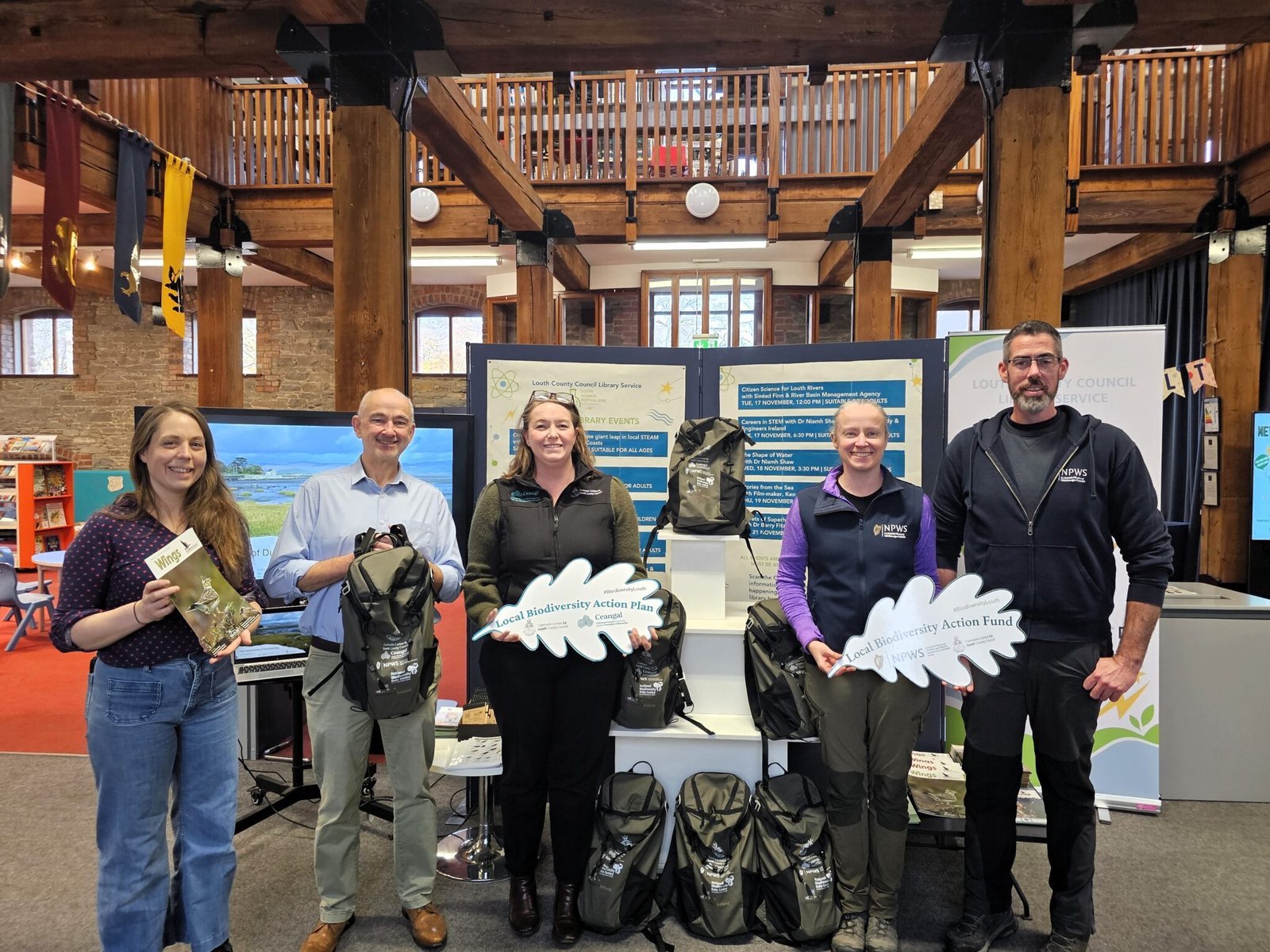
(L-R) Tara Adcock and Dr Andrew Kelly of BirdWatch Ireland; Helen Hanratty of Louth County Council; and Jennifer Lynch and John Loughran of the National Parks and Wildlife Service pictured at the launch of Louth County Council’s Borrow a Bird Watching Bag initiative at Dundalk Library.
Helping people take part in bird surveys
The initiative comes ahead of the Irish Garden Bird Survey, which begins on Monday, 30th November, and runs until the end of February 2027.
The annual survey encourages members of the public to record birds visiting their gardens, helping BirdWatch Ireland monitor population trends and identify changes over time.
Dr Andrew Kelly, Chief Executive Officer of BirdWatch Ireland, welcomed the new library initiative.
“Every survey submitted helps build a clearer picture of bird population trends, highlights species that may be in decline and informs future conservation efforts. We would encourage everyone, whether they are experienced birdwatchers or complete beginners, to take part.”
Amanda Branigan, County Librarian with Louth County Council, said the scheme would also encourage families, schools and community groups to explore science and nature.
“By borrowing a bag through their local library, families, schools and community groups can develop new skills, learn about local biodiversity and even contribute to important citizen science projects. We are delighted to support an initiative that combines science, nature and community engagement.”
How to borrow a birdwatching bag
The birdwatching bags are available to borrow free of charge through Louth County Council Library Service.
For further information, including borrowing arrangements and availability, contact the Library Service by emailing LibraryHelpdesk@louthcoco.ie or calling 042 935 3190.
Anyone interested in taking part in the Irish Garden Bird Survey can find more information at www.birdwatchireland.ie.
The project has received support from BirdWatch Ireland, the National Parks and Wildlife Service, and the Heritage Council, with funding provided through the Local Biodiversity Action Fund and Local Biodiversity Action Plan Grant Scheme.