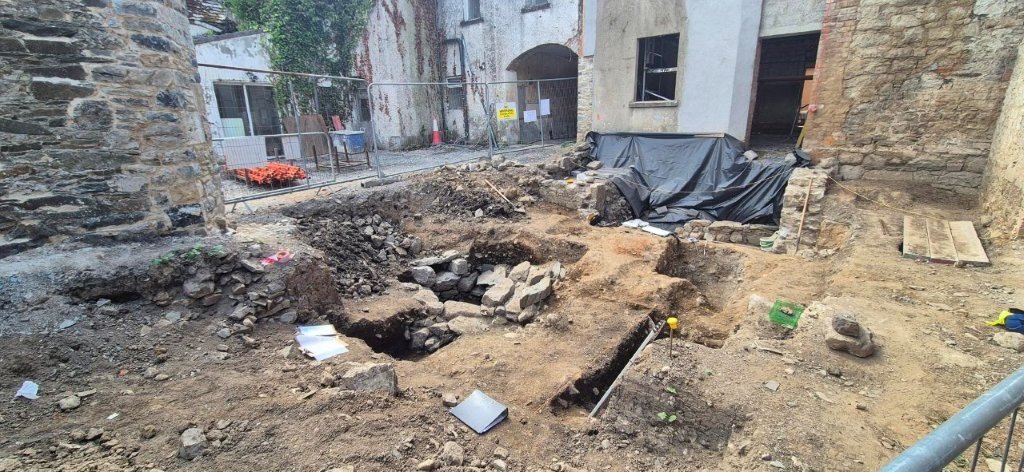
Images of the archaeological works at Ardee Castle/LCC
Archaeological excavations at Ardee Castle have uncovered evidence of life in the town dating back to the 12th and 13th centuries, including a refuse pit, medieval pottery, animal bones and a large circular kiln.
As Ireland celebrates National Heritage Week, archaeological excavations at Ardee Castle have uncovered evidence of life in the town dating back to the 12th and 13th centuries, offering new insights into medieval Ardee as work continues on the regeneration of one of County Louth’s most significant heritage landmarks.
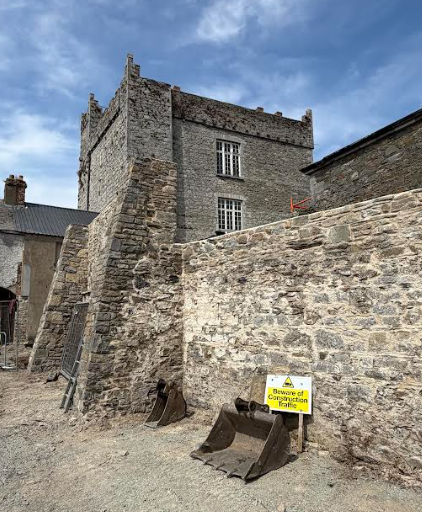
The discoveries have been made as part of a major conservation and regeneration project at the historic tower house. The project includes structural conservation works, refurbishment of the castle, bridewell building and courtyard, improved public access to all four floors of the castle, and the integration of the site into the wider Ardee 2040 regeneration vision.
In January 2026, Louth County Council signed a contract with Francis Haughey Construction to deliver the regeneration project, which will preserve the structure while enhancing the visitor experience and securing the long-term future of the site.
Archaeological excavations being carried out as part of the enabling works have already revealed a range of significant features, including evidence of activity that predates the construction of the castle itself.
Franc Myles of Archaeology and Built Heritage Ltd, who is directing the excavation, said the findings are helping to build a clearer picture of everyday life in medieval Ardee.
“As an archaeologist, this is a particularly interesting site because there’s quite a lot happening,” he said. “Every day, almost every hour, in fact, we come across something new. It’s a very dynamic site, and that reflects the amount of activity that took place over time in what is a relatively small area.
“Although the castle is 14th or 15th century, we have started to find things that predate that and show evidence of life in Ardee from the 12th and 13th centuries.
“The earliest thing we found was a refuse pit, which was cut into the ground before the construction of the castle. It contained a lot of butchered animal bones from various cows and pigs. It also contained medieval pottery and lots of stone chippings, including fragments of mortar and slate, which may indicate that we might be at a very early level in the town’s history.”
Located beside that is probably the most interesting feature of the excavation, a large medieval circular kiln, which Franc is hoping will shed some more light on the construction of the castle.
“When we first came across it, we thought it might be a well, but as we dug into it, we found two flues. We’re not in a position yet to say exactly what it was used for. My own feeling is that it was used to make lime mortar, but, literally, we have yet to get to the bottom of it. We are hoping that it might provide us with evidence of how the castle itself was built.”
The largest feature uncovered during the excavation is a substantial stone-built cesspit located beneath the castle’s south-eastern tower.
“It would have contained all of the human cess, which would have come down a huge chute in the wall of the castle,” said Franc. “We have evidence to suggest it was originally a smaller structure, but they had to replace it with something a lot bigger. It cuts through everything on site, so we can identify which is early and which is late.”
Most of the findings were uncovered under the Judges’ Chambers, an early 19th-century house right beside the castle, which was used by judges to robe and disrobe before and after court cases.
“An extension was built onto the Judges’ Chambers in the early 20th century, and it was only when we took the floor of the extension off and started digging underneath it that we began to uncover the features that we are excavating,” said Franc. “It gives us a nice picture of what sort of activities were going on.
“The more you can see in archaeology, the better,” he added. “When you open things up, a lot more becomes evident. A lot of things happened here over time, and when we are finished the excavation, our job is to go back over our paperwork, our photos, our findings and create a story and narrative of the site and what it would have looked like.”
Cllr Dolores Minogue, Cathaoirleach of Louth County Council, said: “As an Ardee native, it is particularly exciting to see these discoveries coming to light as work progresses on the regeneration of Ardee Castle.
“Ardee is one of Ireland’s oldest towns and has a rich history that continues to shape its identity today. The archaeological findings are helping us to better understand the lives of those who lived and worked here centuries ago and are adding another fascinating chapter to the story of our town.
“National Heritage Week is an ideal opportunity to share these discoveries with the public and to reflect on the importance of protecting and celebrating our built heritage. Projects such as the regeneration of Ardee Castle ensure that these priceless connections to our past are preserved and made more accessible for future generations.
“The regeneration of Ardee Castle will breathe new life into one of Ardee’s most important historic buildings, creating opportunities for residents and visitors alike to engage with the town’s rich heritage.”
For more information on National Heritage Week, visit www.heritageweek.ie/