Set within County Meath, the area reflects a quieter side of the region’s past. A significant part of Laytown’s history is hidden within its landscape, waiting to be explored. These stories, which combine legend and real historical landmarks, offer an insight into how the village developed and what life here was truly shaped by.
- The River Nanny and the Curse of St Patrick
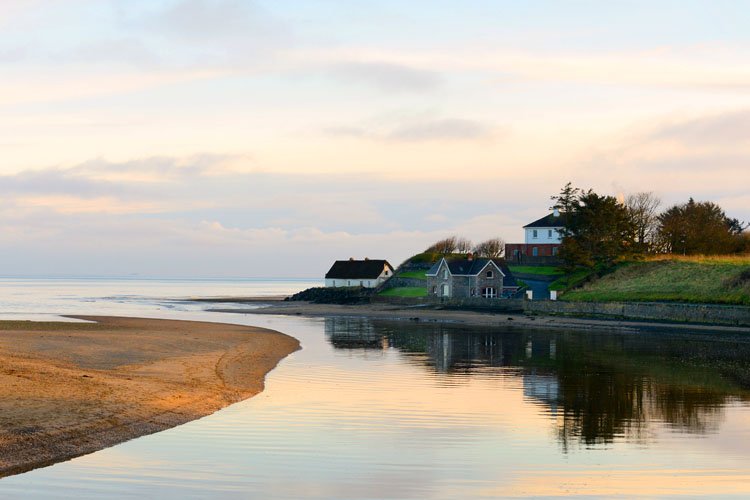
The River Nanny, which runs through Laytown, carries a long trail of stories and local legend, including the tale that the river was once cursed by St Patrick himself. In anger, he cursed the river so that no fisherman would ever again be able to catch salmon there. And although salmon have indeed not returned to this river since that time, it abounds with such legends, and the locals will gladly share them with you if you only ask. - St Patrick’s Well and the first communal baptisms in Ireland
Continuing the story of St Patrick and the River Nanny, another notable place can be found on the riverbank, St Patrick’s Well. It is said that the first communal baptisms in Ireland took place here. Although the well is located on private land and may not always be accessible, its limited access adds to its sacred and spiritual nature. The fact that it has survived to the present day remains striking in itself. - Nanny Water Cottage and smuggling in Laytown
Nanny Water Cottage was originally built by the coastguard to combat smuggling in the Irish Sea during the XVIII and early XIX centuries. While smuggling in the Irish Sea has long since disappeared, the cottage has remained as a witness to this unsettled period in Irish history. Built over 300 years ago, the cottage has survived remarkably well and still offers a clear sense of its original purpose along the shoreline. - Laytown Strand and the Laytown Races
The Laytown Races were first held in 1868 and originally played a secondary role to rowing competitions held at high tide. Horse racing only began once the tide had receded, meaning early meetings depended entirely on favourable tidal conditions. While the event itself takes place just once a year, the strand remains closely associated with this tradition throughout the year. - Laytown Viaduct
The Laytown Viaduct dates back to the arrival of the railway in the nineteenth century and became a key feature in the village’s development. Rail access connected Laytown with Drogheda and Dublin, altering both settlement patterns and the pace of growth. The viaduct remains in use today and continues to shape the local landscape.
Laytown’s history is not tied to monuments or grand structures, but to the village itself, its people and its landscape. Spending time here offers a different way to connect with the history of County Meath, shaped by local legends and everyday traditions rather than castles and stories of kings and elites.