A LOCAL councillor has claimed this week that Louth County Council “has failed” Drogheda.
Who knew, apart from anyone who takes a stroll through the wasteland that is Narrow West Street or tries to drive through the borough’s permanently traffic-choked streets.
At February’s meeting of Drogheda Borough District, Cllr Paddy McQuillan rightly refused to withdraw the remark that the Louth County Council had “failed Drogheda”. Why should he when it’s true?
Since the old Borough Council was abolished by Fine Gael and Labour in 2014 the town has been in a death spiral which is obvious to everyone except those who refuse to acknowledge it.
Cllr Paddy McQuillan was highly critical of the impact of the so-called reforms that obliterated centuries of the town’s history and effectively handed over the running of this ancient borough to Dundalk.

“Since the Local Government Act, Drogheda has gone backwards at one hundred miles an hour,” said Cllr McQuillan at the meeting, which apparently didn’t go down well.
To prove his point he highlighted the dereliction in the town centre and major infrastructure delays such as the Port Access Northern Cross Route.
At the same meeting, Cllr Kevin Callan tabled a motion calling on the Government to reintroduce borough-level powers which was backed by councillors.
Apparently a Local Democracy Taskforce has been looking at the situation and is preparing to publish its recommendations in the coming weeks.
Labour Cllr Pio Smith said he’s fully behind moves to restore local democracy but pointed out that the Task Force failed to include key Drogheda issues like restoring a borough council or city status in its terms of reference.
That’s why you can only laugh when you read media stories with the banner “Local Democracy Reports” which are subsidised with taxpayers’ money.
The irony is local democracy is the last thing the Government wants and that is borne out by the fact that Ireland’s biggest town is run from a smaller town at the other end of the county.
A couple of years ago a report from the Congress of Local and Regional Authorities of Europe (CLRAE) found that Ireland’s local government system is among the most limited, the most centralised, and the least representative in Europe.
The report found that with an average of 5,399 people per councillor, Ireland had fewer councillors per capita than any other country, with the exception of Hungary, which is hardly a bastion of democracy.
The decision to scrap all of the country’s 80 town councils and associated 700 councillors was spearheaded by Mr Watercharges himself, former Fine Gael minister and European Commissioner, Phil Hogan.
There’s been a lot of water under the bridge since then and Big Phil has recently been heading a lucrative consultancy firm which, according to the Irish Times, made over a million euro in 2024.
On the other hand Drogheda’s elected representatives have to consult with Louth County Council in Dundalk on issues such as local planning, housing, and operational services. That’s local democracy Irish style.
THE glory that once was West Street.
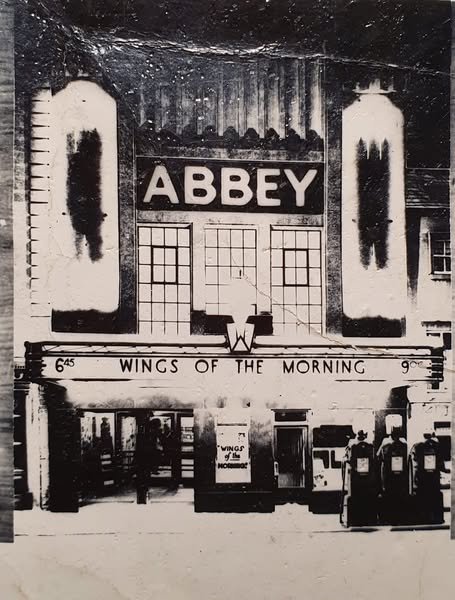
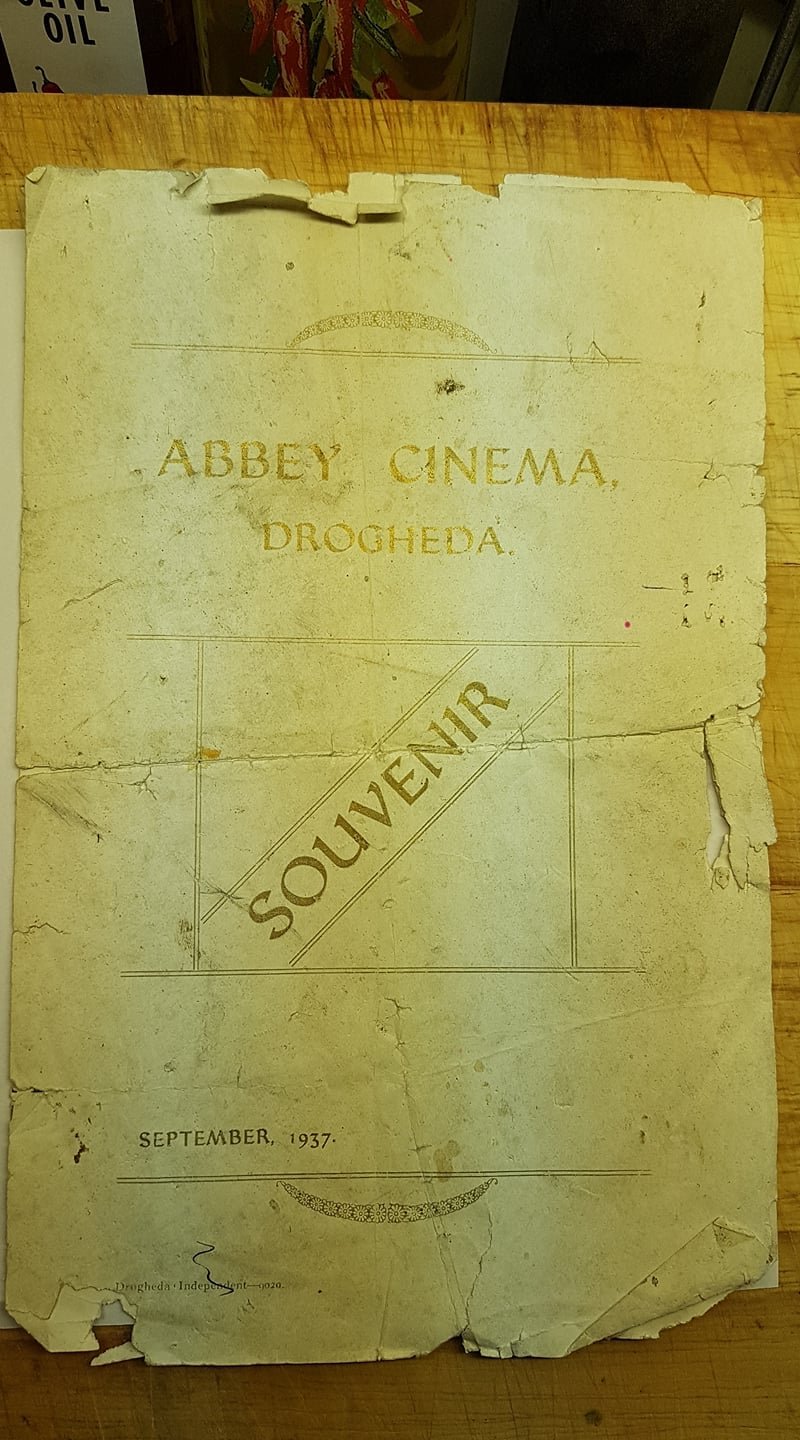
THE glory that once was West Street. I came across these photos of the opening night of the Abbey Cinema in September, 1937.
It must have seemed like a bit of Hollywood had come to Drogheda as the new building with its art deco style was one of the most luxurious cinemas in the country at the time.
My mother, who was sixteen at the time, was there for the opening night but could only watch from outside… having to make do with a matinee during the week.
It’s hard to believe this glorious part of Drogheda’s history is now an eyesore and a blot on the landscape and looks like being that way for the foreseeable future.
Rain, Pipelines and Common Sense
DON’T know about you but I feel like we’ve been living on the set of Angela’s Ashes as it hasn’t stopped raining since the first week of January.
In the late Frank McCourt’s poignant, best-selling 1996 memoir (and the movie of the same name) it seems to be always raining on the banks of the Shannon in Limerick City.
It’s been a bit like that in Drogheda and with more rain on the way next week you have to question why the Government wants to build a pipeline to bring water from the Shannon to Dublin and the east coast.
We’re being told that we’re in for wetter winters because of climate change so why not build enough reservoirs to hold the water and save the taxpayer up to €12 billion on a pipeline.
On thing’s for sure after the deluge of the last month any who calls for a hosepipe ban after a few days of sunshine (some chance) risks being strung up with said hosepipe.
Still Shut, Still Ignored
IN February 2024 I wrote a column in the Irish Daily Mirror condemning the closure of the D Hotel and its change of use to an international protection centre and was called a fascist for my trouble.
The ordinary people who took part in a protest calling for Drogheda’s largest hotel to remain open were condemned as right wing agitators.
They, and I, were angry that, without public consultation, the only remaining large hotel in a city of 50,000 people with a hinterland of 100,000 was gone.
Two years on members of Drogheda Borough District have made a formal request to Minister Jim O’Callaghan not to renew the contract at the D Hotel because of the economic consequences its closure has on the area.
After a wishy-washy response from the Department of Justice it looks like the D Hotel will remain off limits for local people.